


What is Digital Customer Experience (DCX) and Why is it Crucial?
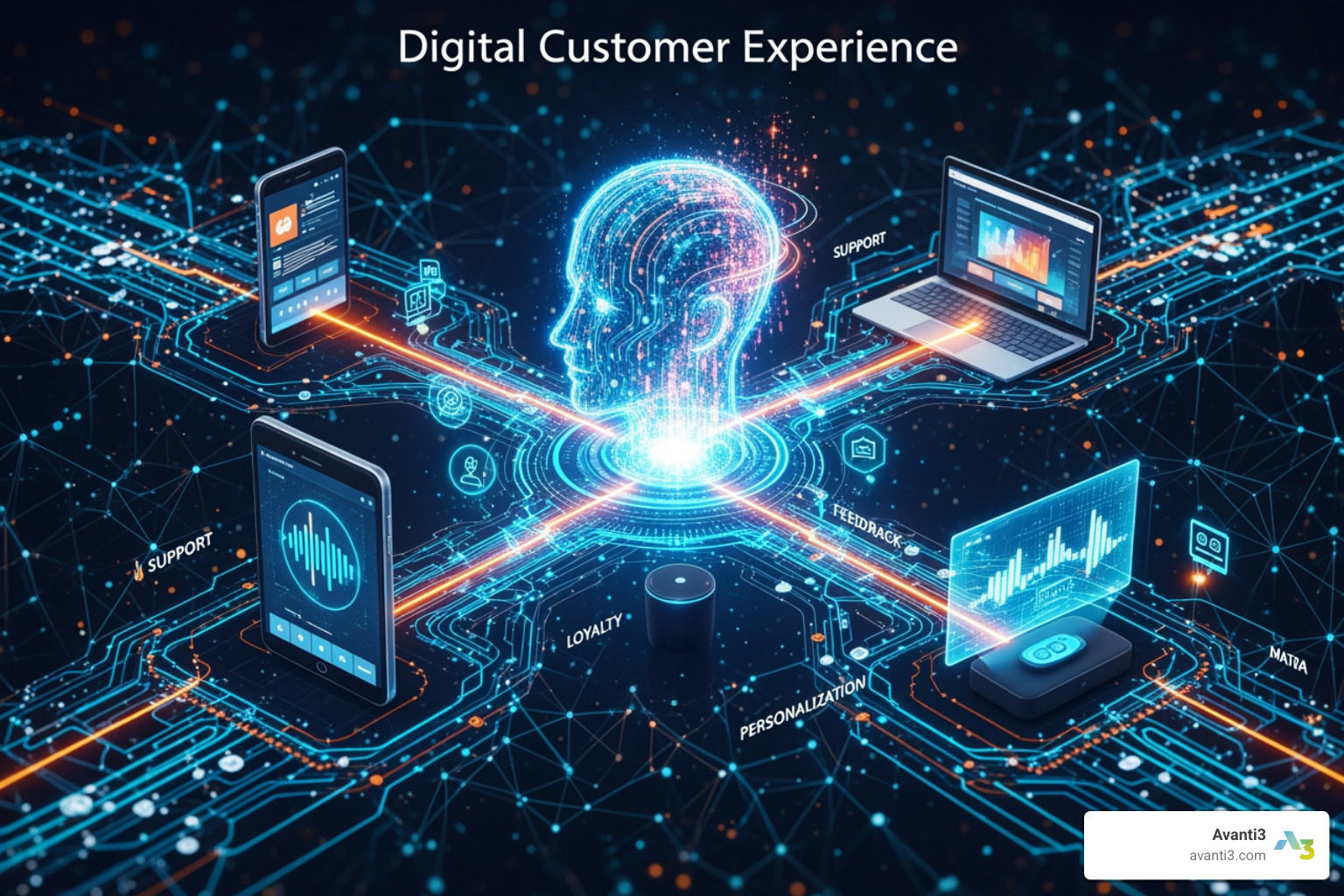
Digital customer experience (DCX) is the sum of all online interactions a customer has with your brand—across websites, mobile apps, social media, and chatbots. It’s how customers perceive your brand based on these digital touchpoints, and it directly impacts trust, loyalty, and revenue.
Key elements of a strong DCX:
- Personalization – Custom content and recommendations.
- Seamlessness – A consistent experience across all digital channels.
- Effortlessness – Intuitive interfaces and fast load times.
- Responsiveness – Quick support through live chat or self-service.
- Mobile-first – Optimized experiences for smartphones.
In today’s digital-first world, DCX is a make-or-break factor. Consider the stakes: 71% of consumers expect personalized interactions, and 66% will stop buying from a brand if that experience isn’t personalized. Furthermore, 76% will switch brands after a bad experience. The reward for getting it right is significant. Brands with strong omnichannel strategies retain an average of 89% of their customers, compared to just 33% for those with weak strategies. A positive DCX builds trust and turns customers into loyal fans, fostering the kind of Digital Brand Engagement that drives sustainable growth.

I’m Samir ElKamouny AV, and I help brands transform their digital customer experience using innovative technology and data-driven strategies. My work leverages AI, AR, and blockchain to create meaningful digital interactions that build loyal communities. Let’s explore how to create a digital experience that exceeds expectations.
DCX vs. Traditional CX: A Clear Distinction
While Customer Experience (CX) covers every brand interaction (online and offline), Digital Customer Experience (DCX) focuses solely on digital channels like your website, app, and social media. DCX is a crucial slice of the overall CX pie.
As an article in the Harvard Business Review asserts, a good CX strategy doesn’t equate to a good digital CX strategy. Online customers often prioritize speed and self-service, while in-store customers may value human interaction. However, customers expect a seamless flow between these worlds. A strong DCX must integrate flawlessly with the broader CX strategy to support the modern omnichannel journey.
| Feature | Digital CX | Traditional CX |
|---|---|---|
| Touchpoints | Websites, apps, social media, email, chatbots, AR/VR, IoT | In-store, phone calls, direct mail, face-to-face interactions, events |
| Nature | Primarily virtual, often self-service, data-driven | Physical, human-centric, personal |
| Interaction Speed | Real-time, instant access | Variable, can involve waiting or scheduling |
| Data Collection | Automated, extensive digital footprints | Manual, observational, surveys |
| Scope | Subset of overall CX, focused on digital channels | Holistic, all interactions with the brand |
How to Build and Optimize Your Digital Customer Experience Strategy
Building a successful DCX means thoughtfully weaving together elements that make your customers’ lives easier.
Key Components of a Successful Digital Customer Experience
- Seamless Omnichannel Integration: Customers don’t think in channels; they expect their experience to flow naturally across your website, app, and other touchpoints. Since 75% of consumers use multiple channels for one transaction, a synced cart and consistent journey are non-negotiable.
- Personalization: This is now essential, as 66% of consumers will leave a brand that doesn’t personalize their experience. Go beyond using a customer’s name; use their data to anticipate needs and tailor recommendations and support.
- Mobile-First Approach: With 82% of consumers using mobile devices to help make product decisions, your digital experience must be optimized for mobile. A clunky mobile site will send customers straight to a competitor.
- Intuitive Design: A beautiful interface is useless if it’s confusing. Customers should never have to hunt for what they need. This is where
Digital Experience Designcreates effortless and natural user flows. - Robust Self-Service: 90% of consumers expect online self-service portals. Empower customers with comprehensive FAQs, knowledge bases, and chatbots to solve simple problems on their own terms. This improves satisfaction and frees up your support team for complex issues.
- Proactive Support: Don’t wait for customers to ask for help. Use data to anticipate their needs and offer assistance at the right moment, such as a helpful tip or a reminder about an abandoned cart.

Mapping the Digital Customer Journey
Understanding the customer journey helps you meet them wherever they are. Most digital journeys follow five stages:
- Awareness: A potential customer finds your brand through search, social media, or a recommendation. Your goal is to be findable and make a strong first impression.
- Consideration: The customer researches your products, reads reviews, and compares features. Your content must be transparent and answer their questions thoroughly.
- Conversion: The customer is ready to buy or sign up. A complicated checkout process is a major reason for abandoned carts, so this step must be frictionless.
- Retention: The journey continues after the sale. Nurture the relationship with helpful post-purchase support, personalized tips, and rewarding loyalty programs. Using
Personalized Datamakes these efforts feel relevant. - Advocacy: Satisfied customers become your biggest fans, leaving positive reviews and recommending you to others. Nurture this by making it easy for them to share their experiences.
To map this journey, identify all digital touchpoints, analyze customer behavior to find pain points (e.g., high drop-off rates), and use tools like customer journey map templates to visualize the experience and spot opportunities for improvement.
Common Challenges and Best Practices
Creating an exceptional DCX involves overcoming common problems. Here are the main challenges and how to address them:
- Challenge: Data Silos & Inconsistent Experiences. When marketing, sales, and support systems don’t communicate, customers get a fragmented and frustrating experience.
- Best Practice: Break down silos by integrating systems to create a single view of the customer. This ensures a continuous and consistent journey across all touchpoints.
- Challenge: Outdated Legacy Systems. Old platforms are often inflexible, slow, and difficult to integrate with modern tools, hindering personalization and omnichannel efforts.
- Best Practice: Invest in modern infrastructure. Digital experience platforms are built for the agility, scalability, and integration needed to compete today.
- Challenge: Evolving Customer Expectations & Technology. The pace of change is relentless, and what works today may be outdated tomorrow.
- Best Practice: Accept continuous optimization. Treat DCX as an ongoing commitment to testing, learning, and iterating based on data and customer feedback.
- Challenge: Security and Privacy Concerns. Customers are wary of how their data is used. A breach can destroy trust, with 71% of consumers stating they would stop doing business with a company that mishandled their data.
- Best Practice: Prioritize data security and be transparent about your privacy practices. Build trust by using data responsibly to improve the customer’s experience.
The key is to put customer-centricity at the heart of every decision. Use data and analytics from tools like Google Analytics to guide your strategy, and actively solicit and act on customer feedback. This is fundamental to effective Digital Marketing.
The Future of DCX: Leveraging Technology and Overcoming Challenges
Leveraging Data and Technology for a Personalized Digital Customer Experience
Data and technology are the engines that power a modern DCX. With 71 percent of consumers expect personalized interactions, leveraging these tools is no longer optional.
- Data & Predictive Analytics: Tools like
Google Analyticshelp you understand past user behavior, while predictive analytics uses that data to forecast future needs. This allows you to anticipate what a customer wants before they ask. - Artificial Intelligence (AI): AI automates personalization at scale. It analyzes customer data to customize messages, product recommendations, and entire user journeys, making each interaction feel unique. This is a core component of
AI Customer Engagement. - Augmented Reality (AR): AR bridges the gap between digital and physical. Features like virtual try-ons for clothing or furniture allow customers to visualize products in their own space, reducing purchase uncertainty and lowering return rates.
- Web3 Technologies (NFTs, Blockchain): At Avanti3, we use Web3 to create next-level engagement. NFTs and blockchain can power secure reward systems, verifiable ownership of digital assets, and exclusive community experiences, redefining loyalty and fan monetization. This is central to our
AI Digital Marketingapproach.
Real-World Examples of DCX Excellence
- Warby Parker’s Virtual Try-On: The
Warby Parkerapp uses AR to let customers virtually try on glasses at home. This solves a key online shopping challenge and makes the experience more accessible and engaging. - Apple’s Seamless Ecosystem:
Applemasters the cohesive experience. Through iCloud and features like AirDrop, a user’s data and files are always available and easily shared across all their devices, creating effortless continuity. - UNICEF’s Chatbot for Social Impact:
UNICEFuses its U-Report chatbot to gather feedback from young people in underserved communities. This shows how digital tools can be used for meaningful engagement beyond commercial transactions. - Netflix and Amazon’s Personalized Recommendations: These companies pioneered using algorithms to analyze user behavior and suggest relevant content and products. This continuous tailoring keeps customers engaged by making them feel understood.

Conclusion: Charting Your Course for DCX Excellence
In our digital-first world, a superior DCX is a strategic imperative. The brands that win are those that understand their customers, leverage data and technology, and continuously optimize every digital touchpoint. Customers expect seamless, personalized interactions and will switch brands if those expectations aren’t met.
At Avanti3, we believe the future of DCX lies in combining operational excellence with groundbreaking innovation. We empower brands to build deeper community connections by integrating Web3 technologies like NFTs, blockchain, AR/VR, and AI. This creates unique digital experiences and sets new standards for engagement and fan monetization.
Charting your course for DCX excellence is an ongoing journey of listening, learning, and adapting. By focusing on these principles, you can transform digital interactions from mere transactions into powerful, enduring relationships.
Ready to lift your digital engagement? Explore our Digital Engagement Platforms and find how we can help you build an unparalleled digital customer experience.