


Why Customer Engagement Defines Modern Business Success
Customer engagement is the ongoing, meaningful relationship between a brand and its customers, built through consistent interactions across multiple touchpoints. It moves beyond single transactions to create connected experiences that foster loyalty, drive repeat business, and turn customers into advocates.
Quick Answer:
- What it is: The emotional and psychological connection customers have with your brand through continuous interactions.
- Why it matters: Engaged customers can deliver 23% higher profitability, revenue, and relationship growth compared to average customers.
- Key difference: Unlike customer satisfaction (a single transaction) or customer experience (overall perception), engagement measures the strength and depth of the ongoing relationship.
Today’s customers compare you to every great experience they have, from Netflix’s personalization to Amazon’s seamless checkout. In fact, 80% of customers now say the experience a company provides is as important as its products. The stakes are high: more than half of customers will leave after just one unsatisfactory interaction.
However, businesses often miss that genuine engagement stems from emotional connection, not aggressive advertising. The majority of buying decisions are driven by the heart. I’m Samir ElKamouny AV, and I’ve built my career helping businesses transform customer relationships through innovative engagement strategies. In this guide, I’ll show you how to build meaningful customer engagement that drives real business results.
The What and Why of Customer Engagement

In today’s hyper-connected world, customers crave connection and experiences that resonate on a deeper level. This is where customer engagement becomes the heart of modern business. It’s the sum of all interactions a customer has with your brand and, more importantly, how those interactions make them feel and what they inspire them to do.
Many businesses confuse engagement with its relatives: customer experience and customer satisfaction. Here’s a simple breakdown:
- Customer Satisfaction: A snapshot measuring happiness with a single transaction.
- Customer Experience: The wider view, encompassing the entire journey and overall perception of your brand.
- Customer Engagement: The deep, ongoing relationship that keeps customers coming back. It’s a proactive psychological state where customers feel a genuine connection, actively participating in your brand’s story.
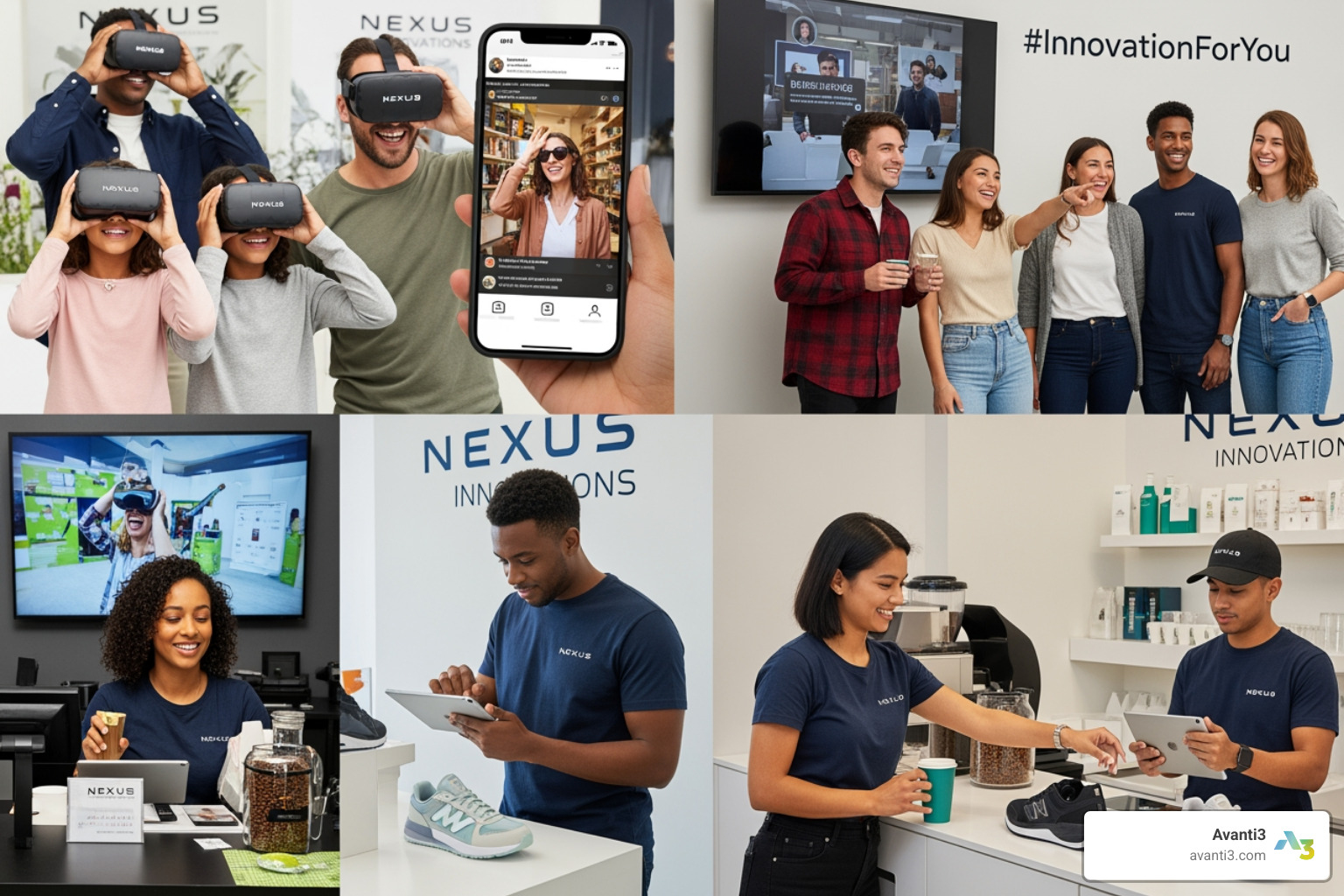
Think of it this way: satisfaction is a handshake, experience is a date, but engagement is a committed relationship.
Defining Customer Engagement: Beyond the Transaction
At its core, customer engagement is a psychological state where customers invest three types of resources into your brand:
- Cognitive Investment: They actively think about your brand and how it fits into their lives.
- Emotional Investment: They genuinely care about your brand, feeling excitement for your successes and pride in their association with you.
- Behavioral Investment: They act on their feelings by leaving reviews, sharing content, and participating in your community.
Engagement is a two-way dialogue. It’s not about broadcasting messages; it’s about creating genuine conversations where customers become active participants in your brand’s story. This is why 80% of customers value experience as much as products—they are choosing relationships, not just things.
The Business Case for Engagement: Loyalty, Retention, and Growth
Investing in customer engagement directly drives the metrics that matter most. Engaged customers develop genuine loyalty, sticking with you through price changes and competitive pressure. This loyalty has a massive financial impact on customer retention.
Acquiring a new customer costs five times more than retaining an existing one, according to research highlighted by Harvard Business Review. Engaged customers don’t leave, which dramatically reduces your churn rate and saves on acquisition costs. They also spend more, increasing their Customer Lifetime Value (CLV). That 23% premium in profitability and revenue is the difference between thriving and merely surviving.
Beyond sales, engaged customers provide invaluable feedback and become your most powerful brand advocates. They write the positive reviews that influence new buyers, with 87% of consumers confirming a purchase decision based on a favorable review. Investing in engagement isn’t just good practice—it’s a strategic imperative for sustainable growth.
Mastering the Art and Science of Effective Customer Engagement

Effective engagement is equal parts art and science, weaving together an omnichannel strategy, personalization, smart data use, a distinct brand voice, proactive support, and community building. It all starts with one essential ingredient: trust.
Building Trust: The Foundation of Lasting Relationships
Without trust, engagement is just noise. According to research popularized by Harvard Business School professors, trust is built on three pillars. Inspired by Aristotle’s principles, this concept is often called the “trust triangle”.
- Authenticity: Be genuinely you. Customers can spot phoniness. They want to see the human side of your brand, which builds a real connection.
- Logic: Demonstrate clear expertise. When you establish yourself as a knowledgeable resource, like Whole Foods does with its educational content, trust follows naturally.
- Empathy: Truly understand your customers’ needs. Airbnb built an empire on empathy by tailoring experiences for guests and showing equal support for their hosts, creating a virtuous cycle.
Building trust requires transparency and consistency in every interaction. For more on this, see our approach to Digital Brand Engagement.
Actionable Strategies for Modern Engagement
With trust as your foundation, use these strategies to build meaningful connections:
- Develop a recognizable brand voice: Be consistent and relatable across all channels, like Mailchimp does with its distinct personality. This helps customers form an emotional connection.
- Accept an omnichannel approach: Customers expect seamless experiences. Yet, while 79% of customers expect consistency, 56% say they often have to repeat information. Close this gap by integrating systems so customers experience one cohesive relationship with your brand.
- Personalization at scale: Generic messages are ignored. 65% of consumers will remain loyal to companies offering personalized experiences. Use data to offer relevant recommendations and anticipate needs.
- Active social media interaction: Social media is for conversation. Respond to comments, run polls, and host Q&As. Sephora’s “Beauty Insider” community turns customers into content creators and brand ambassadors.
- Proactive support and education: Don’t wait for problems. Reach out with helpful tips and check-ins. Since 66% of customers prefer self-service for simple issues, a comprehensive help center is an essential engagement tool.
- Value-driven loyalty programs: Go beyond points. Nike’s training apps help customers achieve fitness goals, creating value that supports their aspirations and builds a deeper connection.
The Tech Revolution in Customer Engagement: AI, AR, and Community

Technology is enabling genuinely better customer experiences.
Artificial Intelligence provides 24/7 support via chatbots and assists human agents with instant access to customer data. More powerfully, AI enables predictive service and personalization, anticipating needs before they arise. At Avanti3, we harness AI Customer Engagement to create intelligent systems that learn and adapt.
Augmented and Virtual Reality (AR/VR) are changing how customers experience products. AR lets users virtually try on clothes or see how furniture looks in their home, reducing purchase uncertainty. Our Augmented Reality Marketing solutions bring products to life, making shopping interactive and fun.
With this power comes responsibility. Ethical data use is essential. Be transparent about data collection and protect privacy to maintain the fragile trust customers place in you.
Fostering community is where technology becomes transformative. Online forums and social groups allow customers to connect, share experiences, and support each other. This sense of belonging drives deep loyalty. At Avanti3, we are passionate about Digital Community Building because strong communities turn customers into a collective force of brand advocates.
Measuring What Matters: Key Engagement Metrics
“What gets measured, gets managed.” To ensure your strategies are working, you must track the right metrics. These numbers provide insight into how customers feel, what they do, and whether they’ll stick around.
| Metric | What it Measures | Why it’s Important |
|---|---|---|
| Customer Satisfaction (CSAT) | Satisfaction with specific interactions/products | Quick pulse check on immediate customer happiness |
| Net Promoter Score (NPS) | Customer loyalty and advocacy | Predicts growth, identifies promoters and detractors |
| Customer Retention Rate (CRR) | Percentage of customers retained over time | Directly impacts profitability; retention beats acquisition |
| Churn Rate | Percentage of customers lost over time | Signals disengagement or dissatisfaction requiring urgent attention |
| Click-Through Rate (CTR) | Effectiveness of calls-to-action and content | Indicates interest in your marketing and content |
| Active Users | Consistent use of products/platforms | Shows ongoing value and reliance on your offerings |
| Session Duration | Time spent on website/app | Suggests deeper interaction and interest |
| Upsell/Cross-sell Rates | Success in expanding customer purchases | Reflects trust, value perception, and Customer Lifetime Value potential |
By monitoring these metrics, you gain a comprehensive view of your customer engagement health, allowing you to spot problems early and prove the ROI of your efforts.
The Future of Engagement is Here

The future of customer engagement is happening now, moving beyond the old “we sell, you buy” model. We are building genuine partnerships where customers have real ownership, voice, and value.
At the heart of this revolution are Web3 technologies like blockchain and NFTs. Instead of forgettable loyalty points, imagine earning an NFT that grants you lifetime VIP access, voting rights on new products, or even a share in the brand’s success. This isn’t just a reward; it’s genuine ownership. You’re no longer just a customer; you’re a stakeholder.
This shift toward decentralized communities empowers customers to help shape product development and guide brand direction. It’s not marketing—it’s co-creation. Furthermore, blockchain technology offers unprecedented transparency and security, rebuilding trust in an age of data breaches.
This future is also defined by:
- Hyper-personalization: AI is creating dynamic customer journeys that adapt to individual preferences and real-time contexts, making customers feel truly understood.
- Immersive Experiences: AR and VR are becoming standard expectations, allowing customers to virtually test drive a car or see how a couch looks in their living room, removing friction from the buying process.
Customers are demanding these changes. They expect seamless interactions, proactive support, and brands that align with their values. This is where Avanti3 comes in. Our platform integrates Web3, AR/VR, and AI to empower brands with customizable tools that go beyond traditional marketing.
Our approach to Digital Engagement Platforms uses technology to deepen human connections. We create experiences where transparency builds trust and every interaction strengthens the bond between brand and customer. The future of engagement is about building a shared future with your customers—moving from transactions to relationships and from audiences to communities. That future is already here.