

Why VR is a Game-Changer for Exhibitions
Virtual reality at consumer exhibitions is changing how brands connect with audiences by creating immersive experiences that go far beyond traditional booth displays. VR transports visitors into interactive worlds to explore products, learn complex information, and form emotional connections.
Key benefits of VR at consumer exhibitions:
- Increased engagement: Interactive experiences hold visitor attention longer than traditional displays.
- Improved learning: Complex information becomes easier to understand through immersive 3D visualization.
- Memorable brand moments: Emotional connections in VR lead to lasting impressions and stronger recall.
- Space efficiency: Showcase large products like ships or buildings in venues too small for physical displays.
- Accessibility: Reach global audiences through virtual exhibitions that transcend physical limitations.
- Measurable impact: Track dwell time, interaction data, and user feedback to quantify ROI.
Research shows that 93% of event planners believe immersive technology like VR improves attendee engagement. Studies also confirm that VR exhibitions boost learning motivation and make complex topics more digestible. From the Louvre’s “Mona Lisa: Beyond the Glass” to virtual test drives, organizations are using VR to stand out. While challenges like cost and motion sickness require planning, VR delivers a powerful competitive advantage.
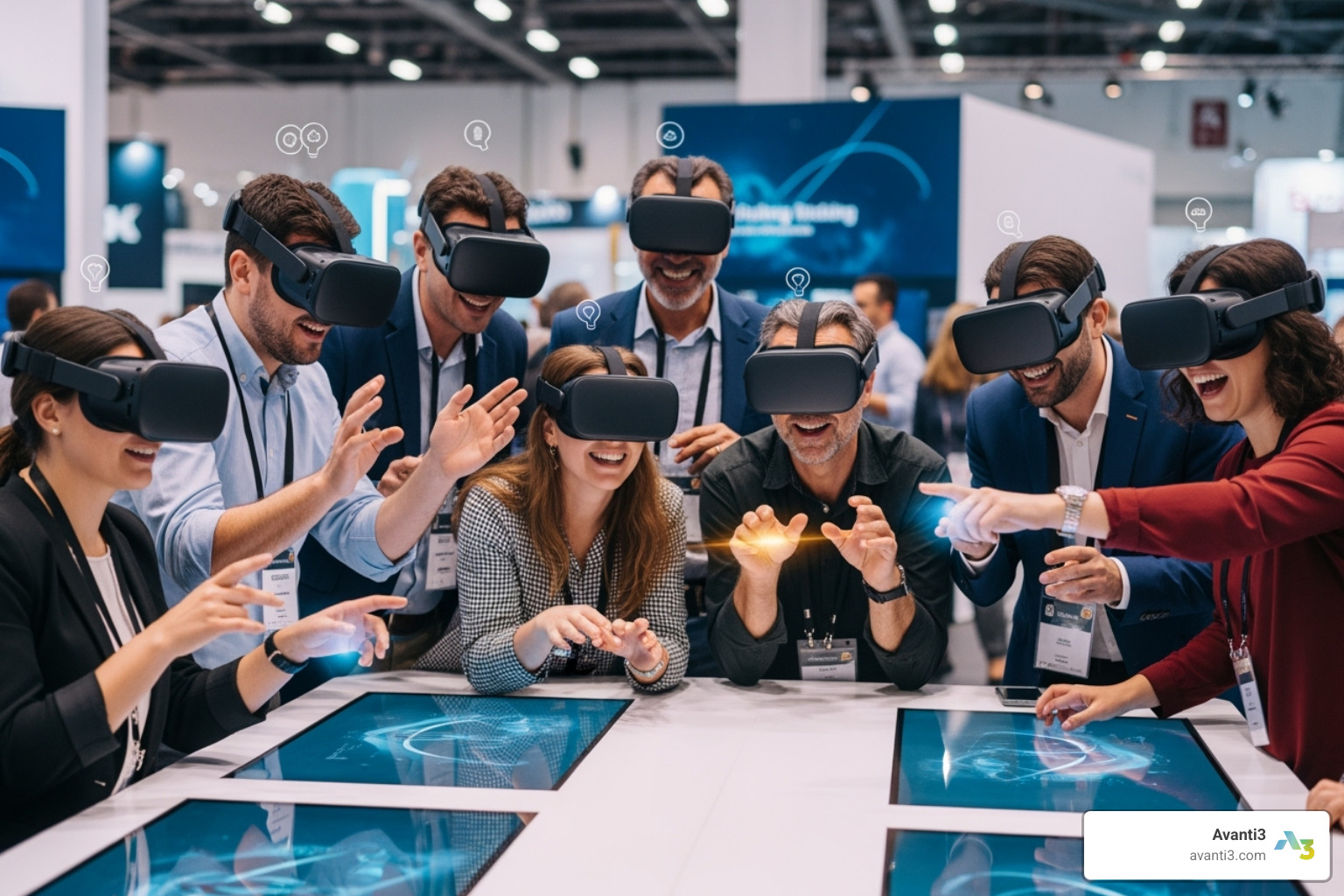
This guide explores how you can leverage VR to captivate your audience and create experiences that drive real business results.
A Strategic Guide to Virtual Reality at Consumer Exhibitions
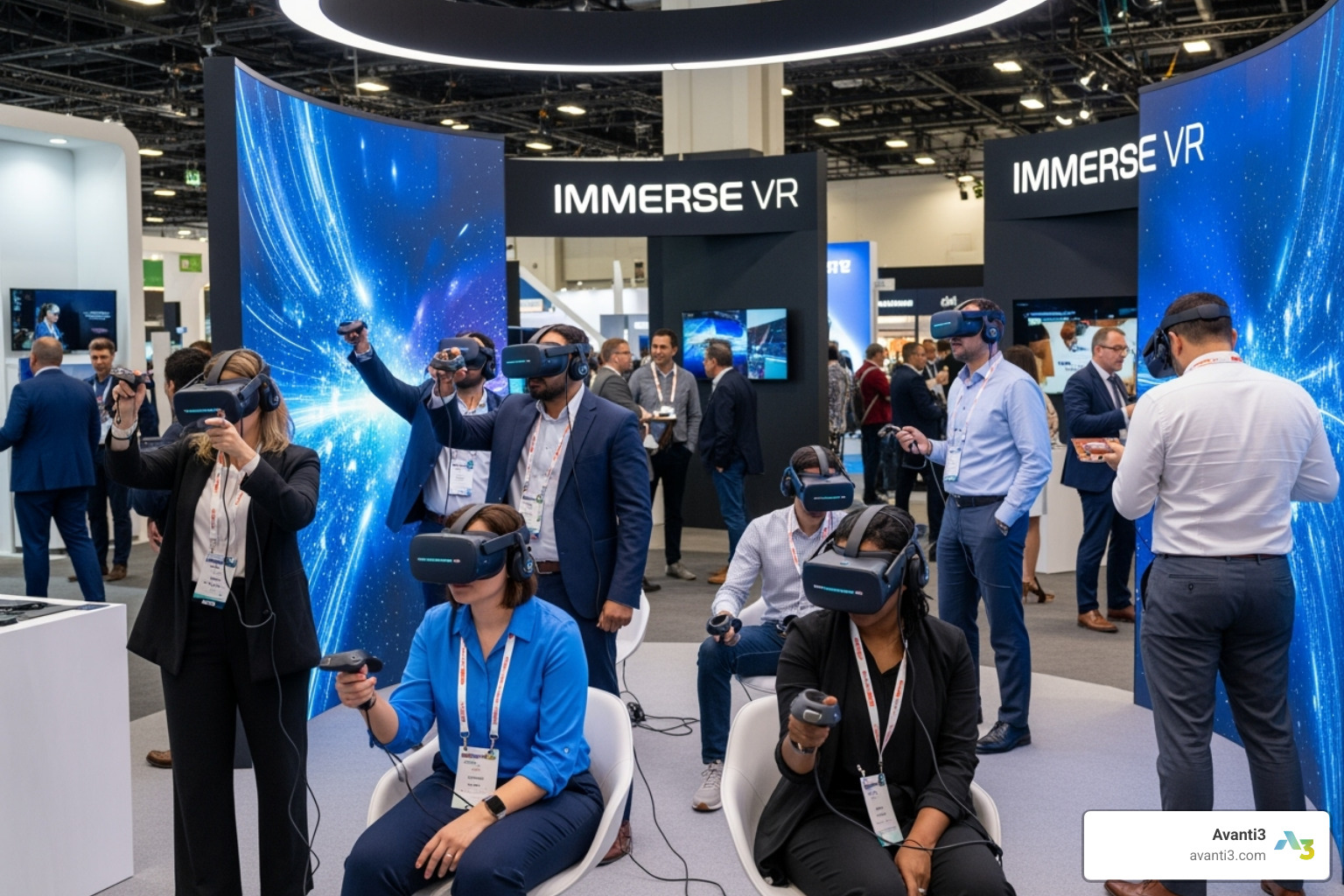
At a busy exhibition, the longest lines are often for booths with VR headsets. Virtual reality at consumer exhibitions has become a strategic tool for cutting through the noise. While traditional displays struggle to hold attention, VR creates experiences that attendees genuinely want to join.
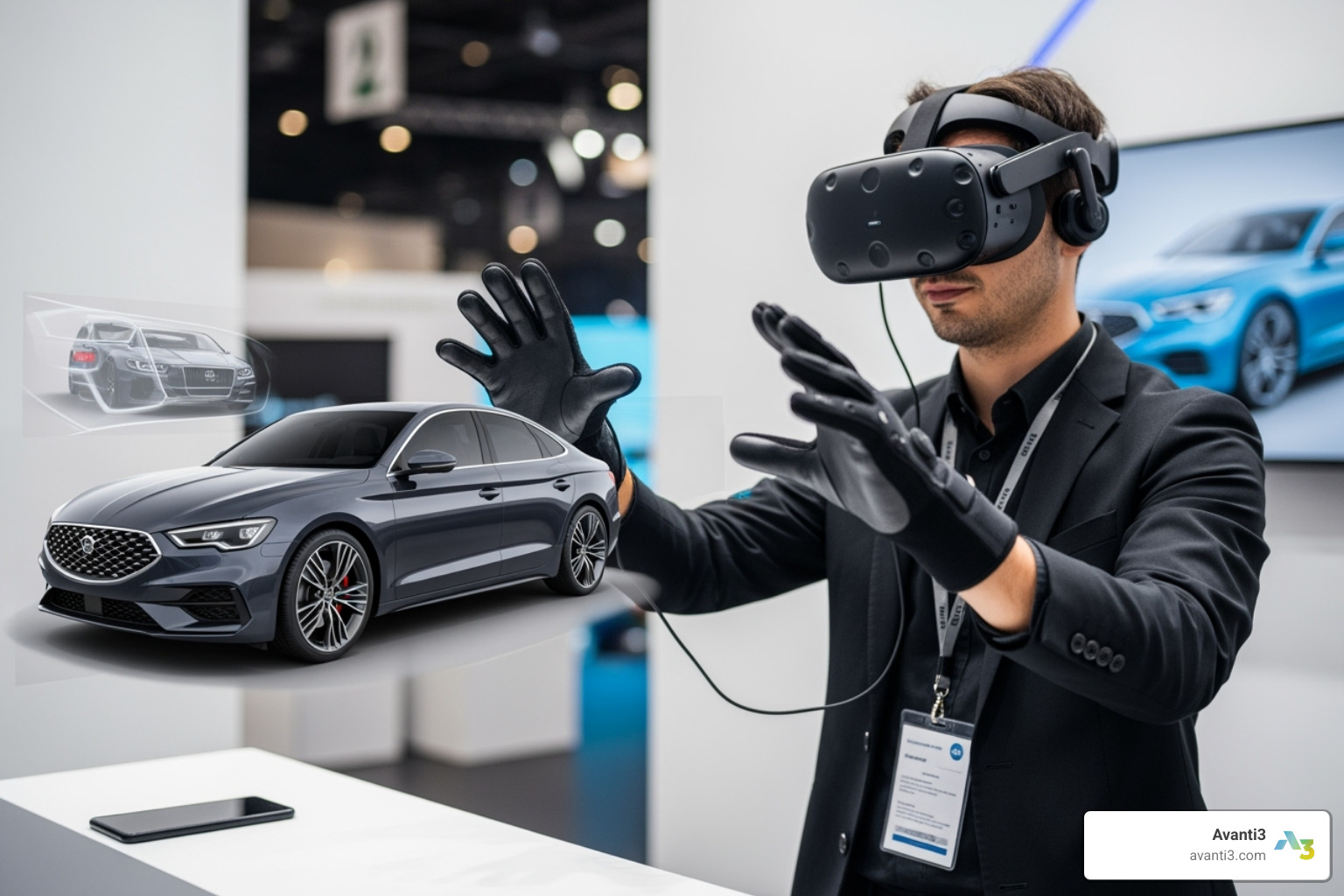
The power of VR lies in overcoming physical limitations. An automotive brand can let visitors virtually explore a new car’s battery system or customize its interior. For B2B trade shows, VR turns complex technical data into engaging, understandable experiences. This approach to Digital Brand Engagement works across industries, from sports teams putting fans on the sidelines to architecture firms offering virtual building walkthroughs. It’s about creating meaningful connections that drive business results.
Enhancing Visitor Engagement and Immersion
VR’s power lies in shifting visitors from passive observers to active participants. Instead of just looking and listening, attendees can explore, interact, and experience a brand’s world. This active participation drives deeper engagement and creates memorable moments.
Scientific research on VR exhibition experiences confirms this. Based on Experience Economy Theory, a study found that entertainment, escapism, education, and aesthetics all contribute to visitor satisfaction. While entertainment and aesthetics draw people in, the key to success is interaction.
The research showed that when users can touch, move, or manipulate objects in the virtual world, they feel more present and immersed, which directly boosts satisfaction. Even educational content must be interactive to be effective. This insight is crucial for Digital Experience Design: the goal is to create compelling experiences that are interactive and comfortable, ensuring users leave with positive feelings. A successful VR activation balances entertainment, aesthetics, and meaningful interaction to improve learning and leave a lasting impression.
Innovative Use Cases for Virtual Reality at Consumer Exhibitions
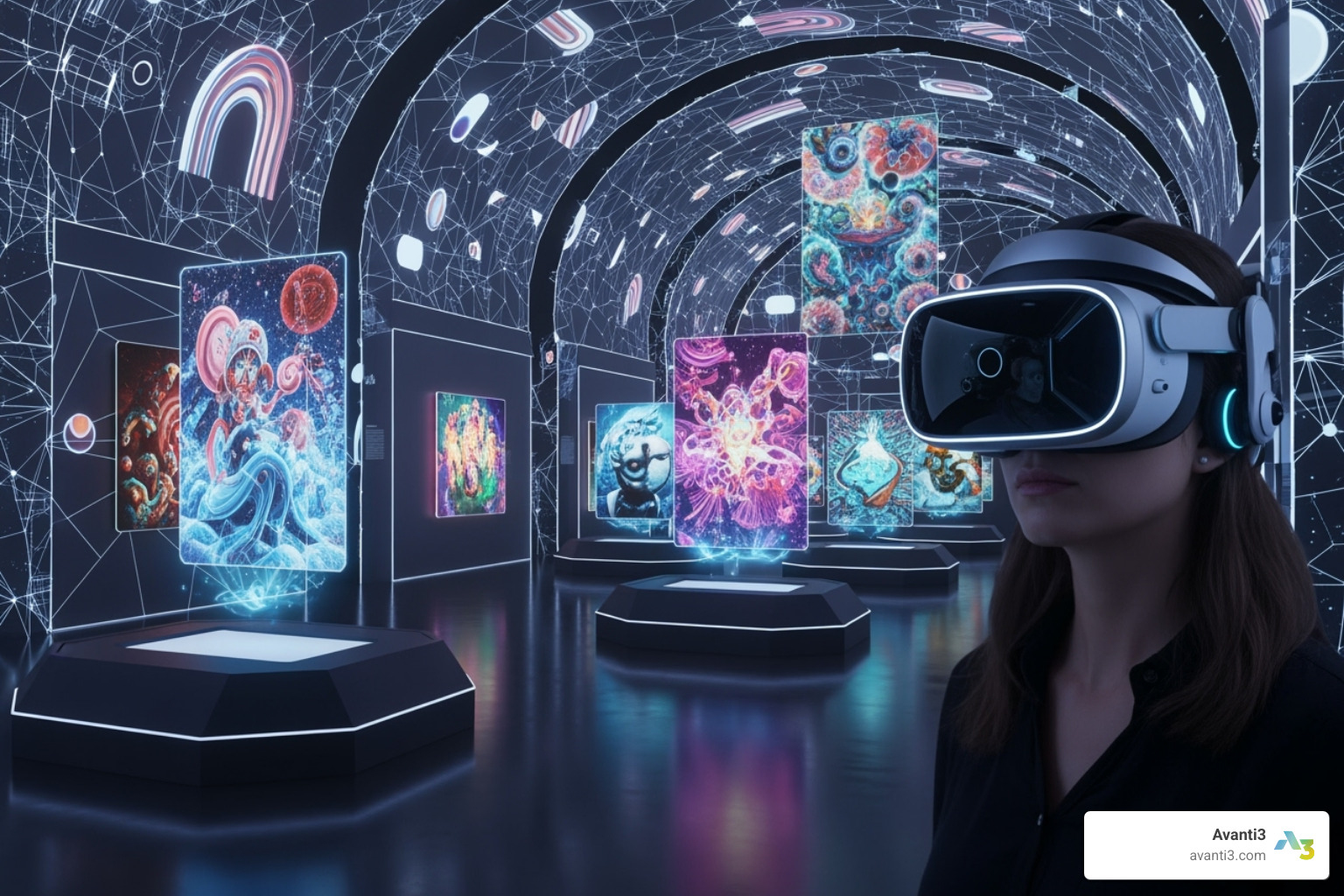
The versatility of virtual reality at consumer exhibitions is clear across many industries.
- Museums and Culture: VR makes art and history more accessible. The Louvre’s ‘Mona Lisa: Beyond the Glass’ allowed visitors to explore the painting’s details up close. The Kremer Museum exists entirely in VR, showcasing a collection of Old Masters in a groundbreaking Virtual Art Experiences venue. Other institutions like the Smithsonian and Tate Modern have used VR to transport visitors to artists’ studios or remote art installations.
- Automotive: Brands use VR for virtual test drives and to let customers explore vehicle interiors and complex features, like battery systems, in ways static displays cannot.
- B2B and Corporate: VR makes complex information engaging. For example, MAKEEN Energy created virtual showrooms for heavy industrial machinery, saving on shipping costs, while financial firms can visualize market data in 3D.
- Sports and Entertainment: VR deepens fan engagement by placing them on the sidelines of a game or in the driver’s seat of a race car, creating powerful emotional connections.
- Fashion and Retail: Brands can allow attendees to design and customize a digital runway show, turning passive browsing into active creation and building brand affinity.
These examples show that VR is a powerful tool for any industry looking to create experiences that transcend the limits of a traditional exhibition.
Overcoming Key Implementation Challenges
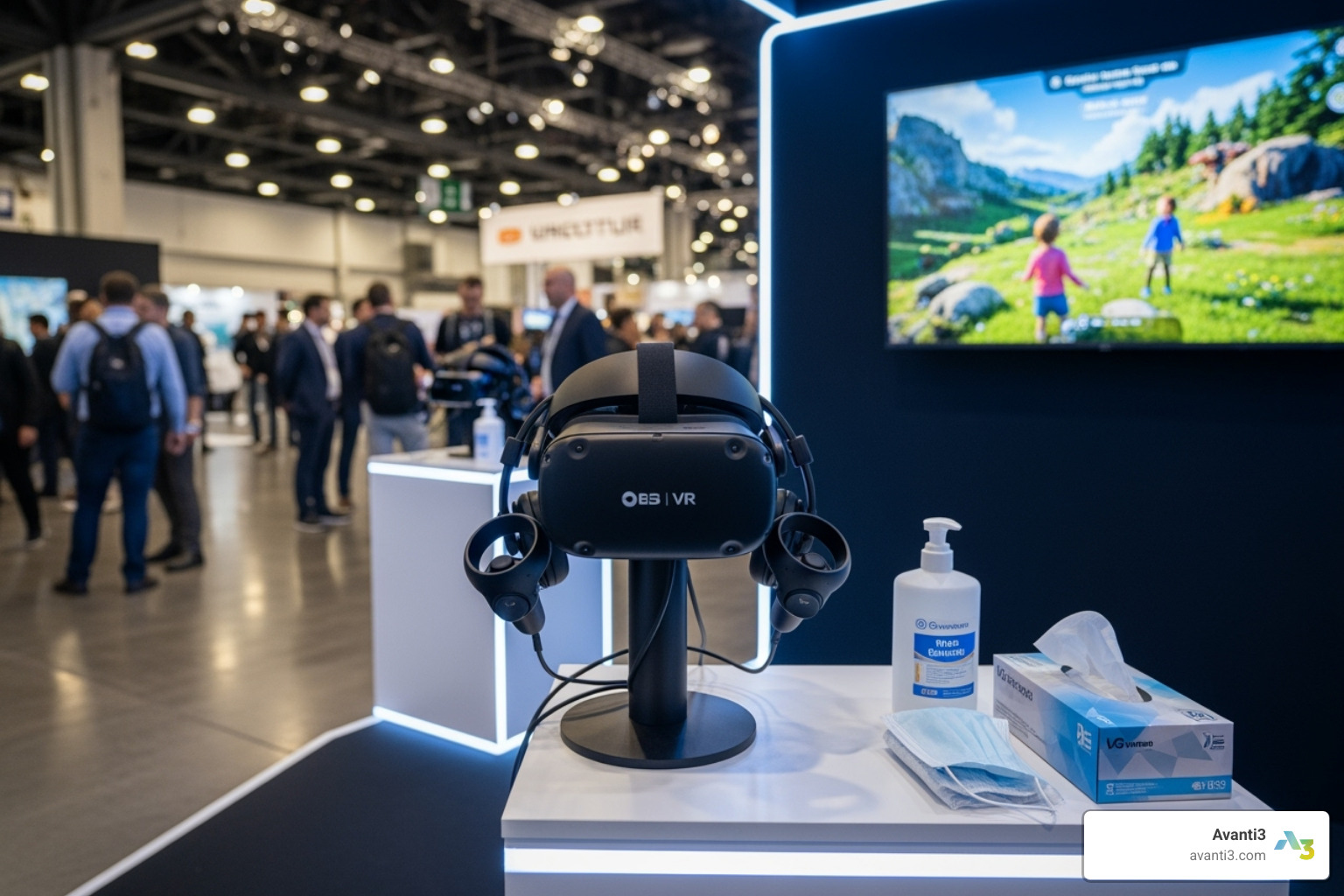
Implementing VR at exhibitions has challenges, but they are manageable with proper planning.
- Cost: While custom VR can be expensive, modern development platforms and subscription-based services offer more affordable entry points. Given that 83% of event planners believe immersive tech would enhance their event ROI, the investment can be justified by tracking metrics like dwell time and user feedback.
- Hygiene and Safety: For shared headsets, use disinfecting wipes, UV sanitizers, and disposable face covers. Ensure safety by designating a clear, spacious area for use, or opt for seated experiences to minimize risk.
- Motion Sickness: This can be minimized with high-quality content that avoids jerky camera movements and uses smooth transitions. An alternative is Mixed Reality is easier for some users, as it overlays digital content onto the real world, which can reduce disorientation and is a great option for Augmented Reality Marketing.
- Technical Logistics: Plan for battery life with a rotation of charged headsets. Make experiences “offline-ready” by pre-loading content to avoid unreliable event Wi-Fi. Use robust, enterprise-grade hardware and enable “kiosk mode”—a feature on most professional headsets that locks the device to your app—for a seamless user experience.
Proactively addressing these points ensures your VR activation runs smoothly and effectively.
Measuring Success and Future-Proofing Your Strategy for Virtual Reality at Consumer Exhibitions

To justify the investment in virtual reality at consumer exhibitions, you must measure its impact and future-proof your strategy.
Measuring ROI:
Go beyond the “wow” factor by tracking concrete data. Key metrics include dwell time, participant numbers, and interaction data (like user gaze patterns). Collect qualitative user feedback through surveys and monitor social sharing to gauge brand excitement.
Future-Proofing Your Strategy:
Keep your activations fresh by leveraging emerging features.
- Technology Trends: Look to AI-driven personalization for bespoke user journeys, a key part of AI Customer Engagement. Social VR allows for shared community experiences, while advancements in hand-tracking, eye-tracking, and haptics make interactions more natural.
- Accessibility: VR can make exhibitions more inclusive for those with mobility challenges and expand your geographic reach to a global audience.
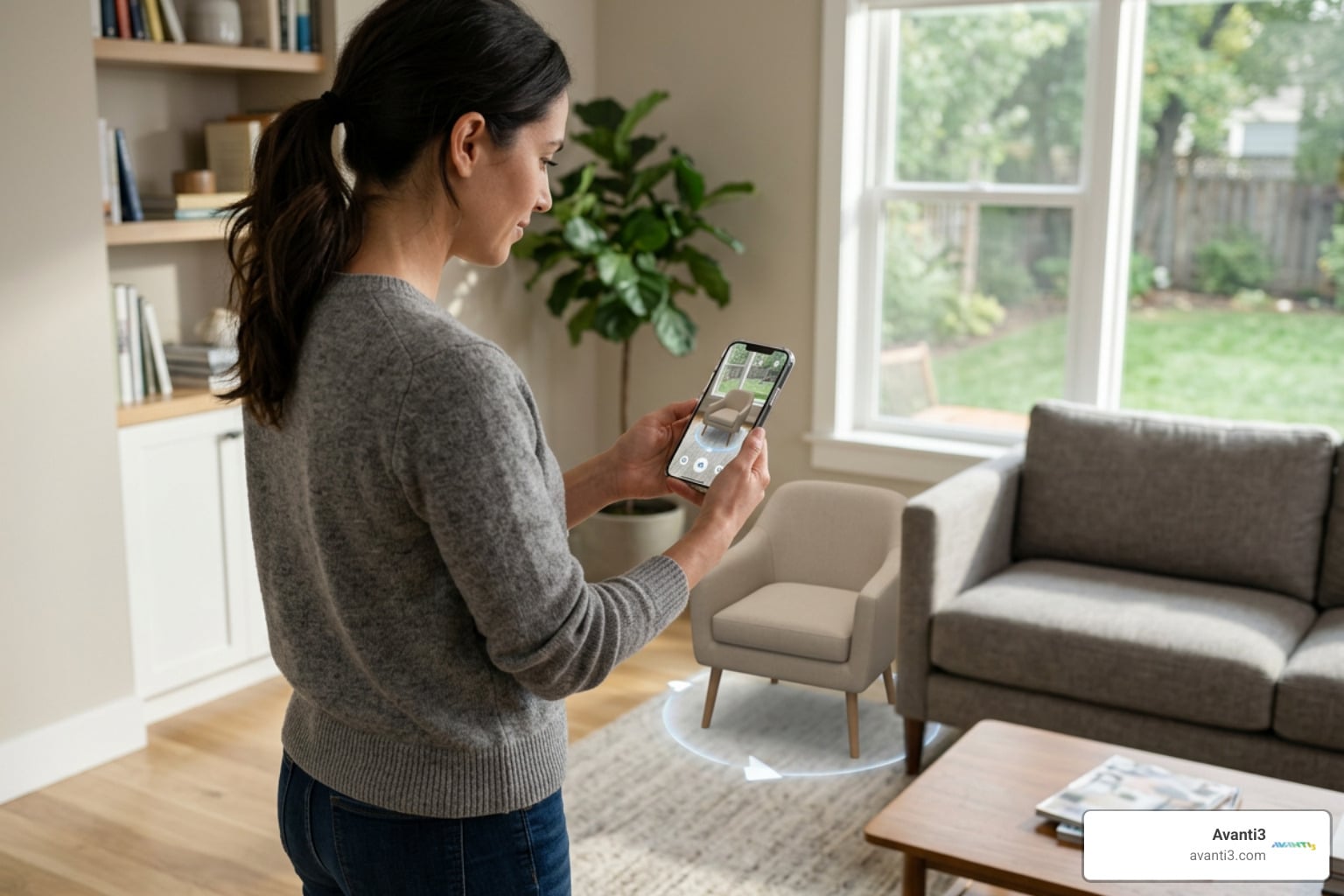
- Alternative Displays: If headsets aren’t a fit for every visitor, consider mobile AR, glasses-free 3D displays, or large LED walls. Streaming a headset’s view to a large screen also creates a shared “spectator view” that can draw a crowd.
By measuring impact and adapting to new technologies, your VR strategy will remain effective and continue to deliver memorable brand experiences.
Conclusion: The Future of Immersive Brand Experiences
Virtual reality at consumer exhibitions is more than a trend; it’s a fundamental shift in creating memorable brand moments. As we’ve explored, VR transforms passive observation into active participation, allowing audiences to step inside a brand’s story.
By blending immersive storytelling with innovative tech, you can create experiences that differentiate your brand and cut through the noise. While challenges like cost and logistics exist, strategic planning ensures the return on investment is significant, building lasting impressions and deeper Digital Fan Engagement.
The future of events is immersive and interactive. VR offers a powerful way to create moments that resonate emotionally, educate effectively, and entertain. It’s about crafting experiences where your audience doesn’t just remember your brand—they remember how you made them feel.
At Avanti3, we help brands steer this landscape. We believe cutting-edge technology is most valuable when it serves a real purpose, enhancing your story to connect, engage, and deliver measurable impact.
The future of immersive brand experiences is here. Explore our Virtual Reality Experiences and find how we can help you create exhibition moments your audience will never forget.