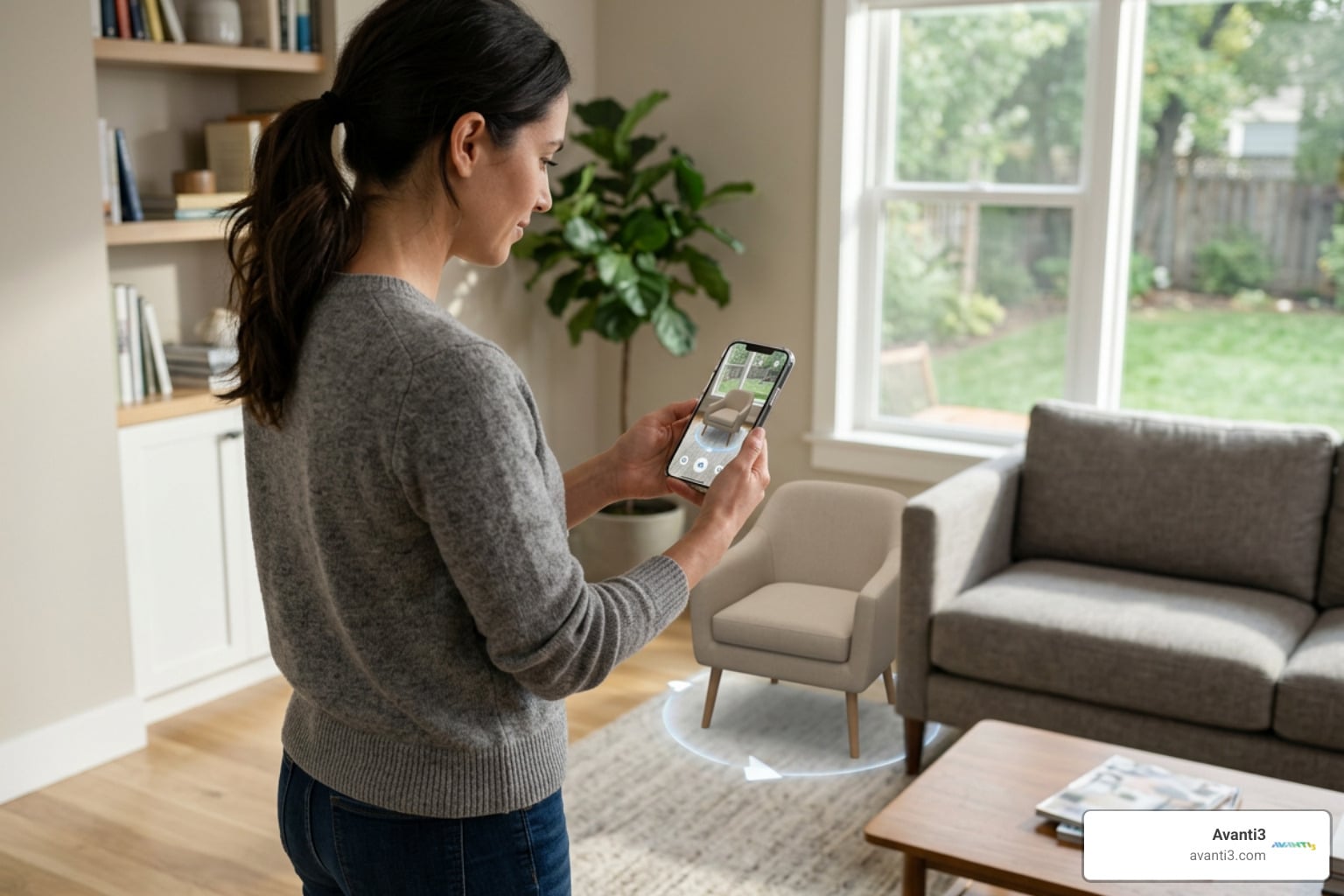


The New Frontier of Digital Interaction
A 3d vr experience places you inside computer-generated worlds where you can look around, move, and interact with virtual objects as if they were real. Unlike flat screens, VR uses stereoscopic displays—showing a slightly different image to each eye—to create true depth perception and a sense of spatial presence.
Quick Overview of 3D VR Experiences:
- Gaming: Free-roam adventures, escape rooms, combat arenas
- Education: Virtual Mars exploration, historical site visits, interactive science
- Entertainment: 360-degree movies, narrative stories, virtual concerts
- Social: Multiplayer worlds, virtual meetups, shared movie watching
- Training: Medical simulations, architectural walkthroughs, skill development
Modern headsets track your head and hand movements, making interactions feel surprisingly natural. As one Reddit user described it: “Although the walls and burnt out cars aren’t really there, you step around them — you can’t help it, it’s that immersive.”
The 3d vr experience market is growing rapidly, projected to reach nearly $29 billion by 2030. From NASA’s Mars explorations to David Attenborough’s documentaries, VR is changing how we interact with digital worlds.
I’m Samir ElKamouny AV, and I’ve spent years helping creators and brands leverage cutting-edge technologies to build engaged communities. Through my work with immersive platforms and Web3, I’ve seen how 3d vr experience solutions can revolutionize audience engagement and create new revenue opportunities.
Introduction to Immersive Reality
A 3d vr experience is a leap beyond traditional screens. By presenting a unique image to each eye, it creates a stereoscopic effect that tricks our brain into perceiving depth, a fundamental difference from 2D screens.
The magic of this difference lies in “presence”—the feeling of actually being there. In VR, your movements control your view and your hands interact with virtual objects, making you an active participant. This deep immersion is what makes a 3d vr experience so powerful.
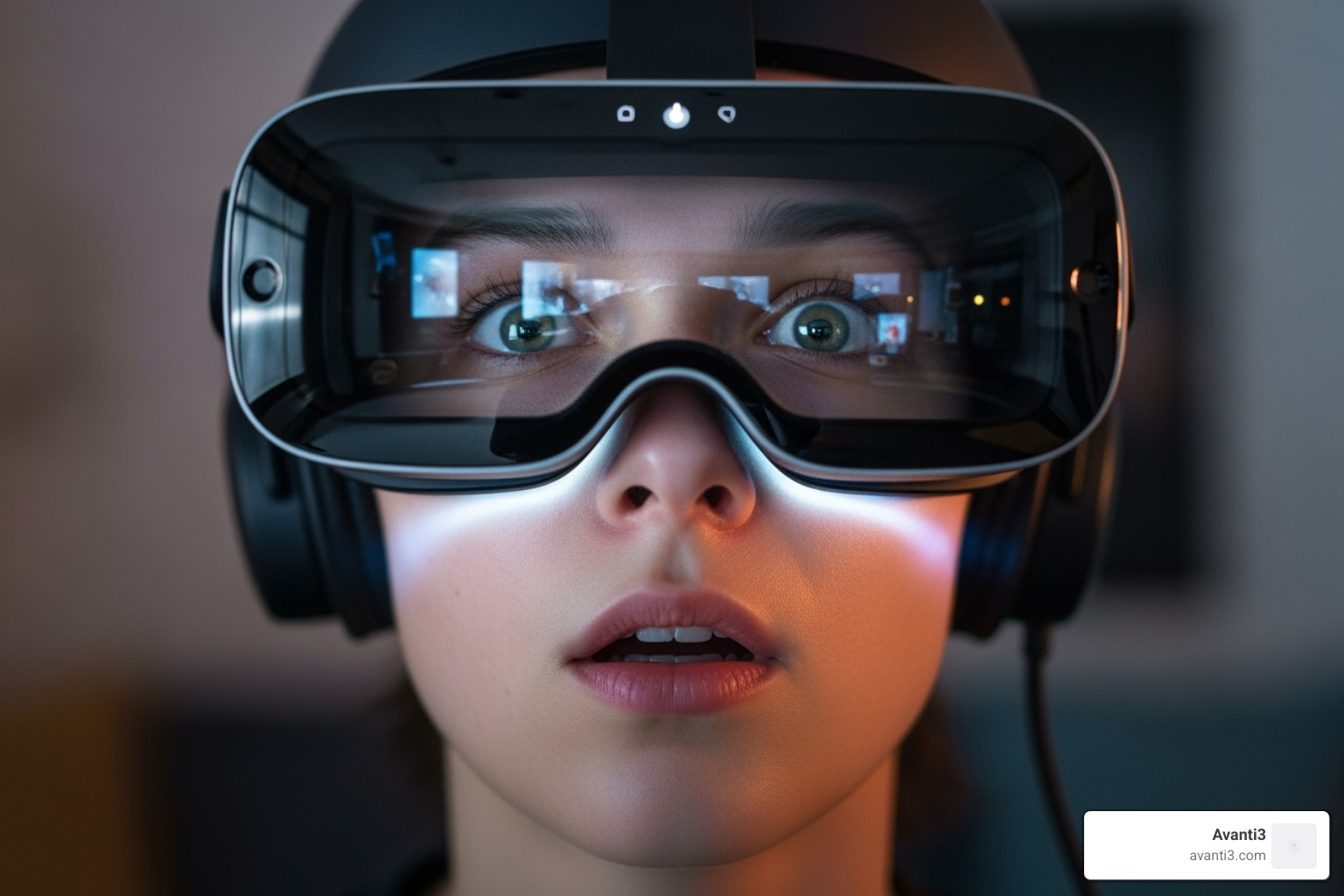
This sensory trick is the core benefit. VR envelops you, eliminating real-world distractions to improve engagement, heighten emotions, and boost learning retention. It’s why free-roam VR experiences earn near-perfect reviews—people love feeling inside the action.
What Can You Do in a 3D VR Experience?
The possibilities within a 3d vr experience are truly limitless, delivering adventures, education, and connections that flat screens can’t match.
Gaming and Entertainment Beyond the Screen
In VR, you don’t just play a game—you become part of it, ducking behind cover and physically interacting with the world.
Free-roam VR is the pinnacle of immersion, letting you walk untethered through warehouse-sized virtual worlds. Experiences like Far Cry VR and Undead Arena are compelling even for non-gamers. VR escape rooms lift puzzle-solving, making the pressure feel real as you manipulate virtual artifacts against the clock.
For story lovers, narrative-driven experiences like Wolves in the Walls let you live inside a movie instead of just watching one. The variety is vast, from meditative interactive puzzles like Puzzling Places to full-body rhythm games and action-adventure titles where you wield virtual weapons with surprising realism.
The Web3 gaming market, which increasingly incorporates VR, is projected to reach nearly $29 billion by 2030, promising an even richer 3d vr experience landscape.
Exploration and Education
VR’s most profound aspect may be its ability to transport us anywhere for learning and exploration.
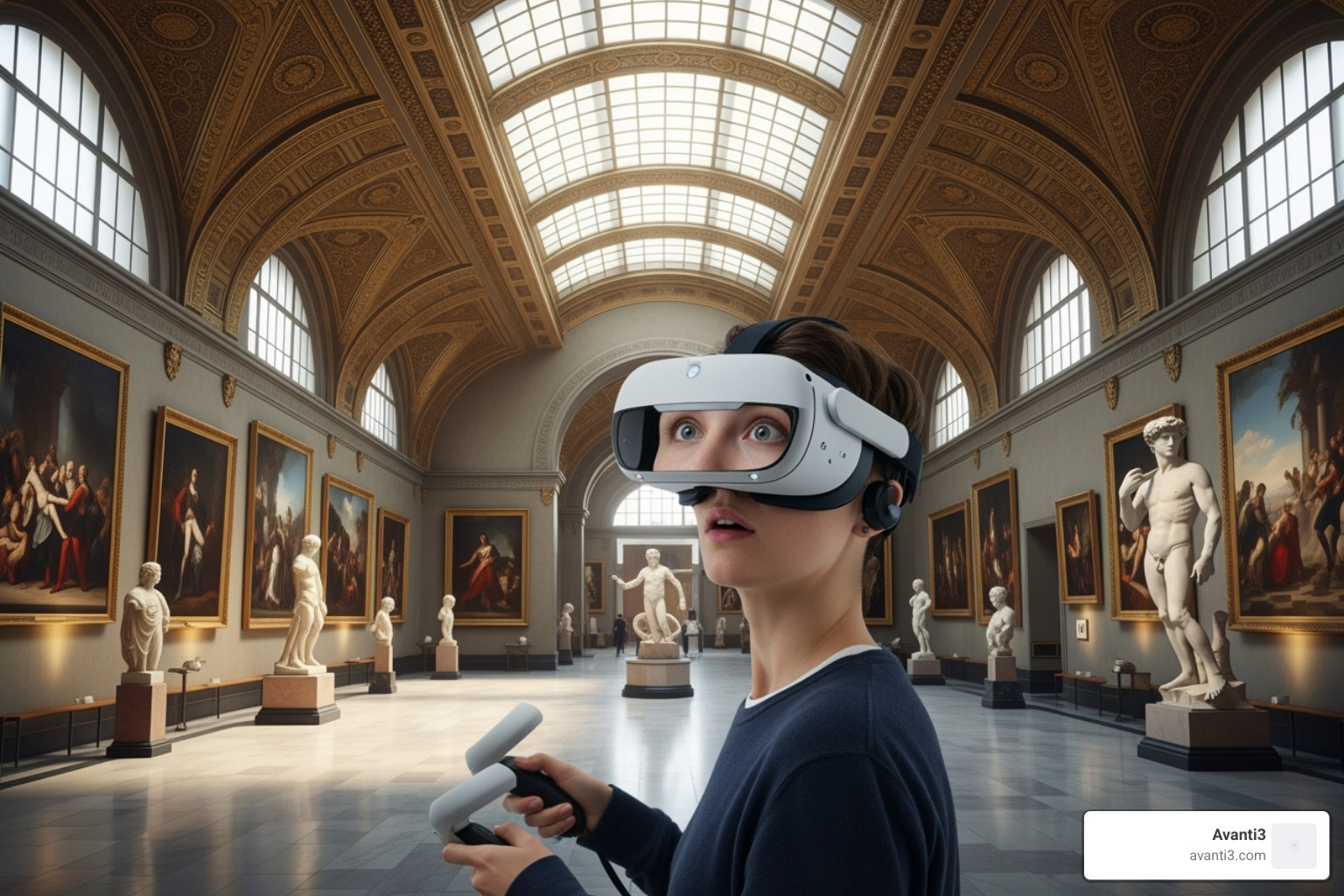
Virtual travel feels surprisingly real. NASA’s Access Mars lets you walk on the Martian surface, while apps like Wander turn Google Maps into an immersive journey through Tokyo or your childhood neighborhood. Historical recreations bring the past to life, from a moving journey through the Anne Frank House VR to exploring ancient sites with the British Museum’s ROCK ART VR: Game Pass Shelter.
Scientific visualization makes complex concepts tangible, letting you explore the human body or conduct virtual chemistry experiments. Immersive nature documentaries, like David Attenborough’s Great Barrier Reef, put you right in the middle of the action. VR’s practical power also extends to medical training, architectural walkthroughs, and therapy.
The Social 3D VR Experience
Far from isolating, a 3d vr experience creates vibrant communities where geography is irrelevant.
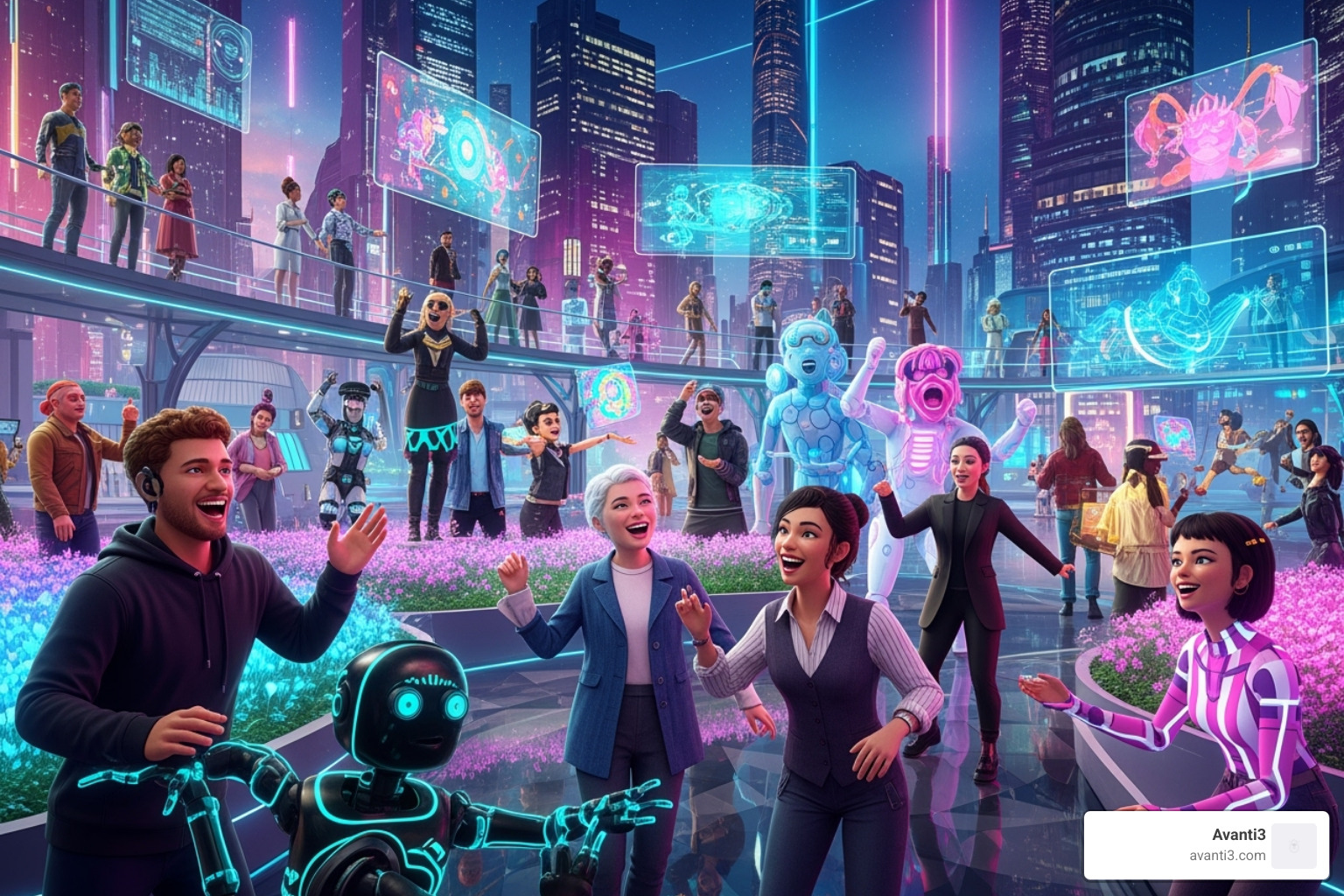
Multiplayer gaming turns solo adventures into shared memories. Coordinating with teammates in a zombie outbreak or VR escape room is more engaging when you can see their avatars’ gestures and hear their voices.
Social hubs like VRChat and AltspaceVR host virtual concerts, art exhibitions, and casual hangouts where you can form real friendships. In the professional world, collaborative workspaces and team-building activities in VR strengthen communication.
Even shared media viewing is upgraded. Apps like BigscreenVR let you create a virtual cinema to watch movies with friends from around the globe. The social dimension of VR proves that the best 3d vr experience isn’t just about escaping reality—it’s about creating new realities to share.
Getting Started and the Future of Immersive Worlds
Stepping into your first 3d vr experience is easier than you might think. Let’s cover how to get started and peek into the exciting future of immersive worlds.
Your Gateway to Virtual Worlds
There’s an entry point for everyone, from a quick taste to a deep dive.
Standalone headsets like the Meta Quest series are the simplest path. As all-in-one devices, they are user-friendly and offer thousands of experiences right out of the box. For cutting-edge visuals, PC-powered VR pairs a gaming PC with a headset for higher fidelity, though this requires a more significant investment.
Once you have hardware, software platforms like integrated app stores or SteamVR are your gateway. For a risk-free alternative, VR arcades offer access to high-end equipment and specialized free-roam setups for an hourly fee, letting you try before you buy.
Challenges and the Evolving 3D VR Experience
While incredible, VR is still evolving. Motion sickness, hardware costs, and inconsistent content quality are common problems. However, innovation is tackling these challenges head-on.
The future of VR is addressing these limitations with remarkable solutions:
- Higher fidelity graphics and lighter, more comfortable headsets are making virtual worlds more realistic and enjoyable for longer sessions.
- Advanced haptic feedback from suits and gloves will let you feel textures and impacts, adding an unprecedented layer of realism.
- AI-driven environments will create intelligent, personalized experiences with NPCs and worlds that react dynamically to your actions. This aligns with how Avanti3 explores AI to empower creators.
- Web3 integration is changing the landscape with true ownership of in-game assets via NFTs and play-to-earn models. The Web3 gaming industry saw $1.1 billion in investment in Q2 2024 alone, with a focus on AAA-quality productions integrating DeFi, VR, and AR.
The upcoming SuiPlay0x1 handheld device, launching in 2025, exemplifies this convergence by bridging blockchain gaming with traditional PC gaming. This integration creates the unique digital experiences, rewards, and community-building opportunities that Avanti3 champions for the future of digital engagement.
Conclusion: Your Next Reality Awaits
We’ve traveled from the magic of stereoscopic vision to the boundless possibilities of immersive virtual worlds—battling zombies, walking on Mars, and diving into coral reefs. We’ve seen how VR transcends entertainment to offer profound educational and social connections.
The benefits are undeniable: unparalleled immersion, deeper engagement, and a sense of presence flat screens cannot match. While challenges persist, the industry innovates at breakneck speed, promising a future that is more accessible, realistic, and interconnected.
The 3d vr experience represents the future of digital engagement. For creators and brands looking to build next-generation immersive experiences and foster vibrant communities, the potential is limitless.
Your next reality is waiting. The question isn’t whether virtual worlds will transform how we connect, learn, and play—it’s how quickly you’ll join the revolution.