

A New Dimension for Art
Virtual reality art exhibitions are changing how we experience and create art by immersing viewers in digital environments that transcend physical limitations. Unlike traditional galleries where you observe art from a distance, VR exhibitions allow you to step inside artworks, walk through impossible spaces, and interact with art in ways never before possible.
Quick Overview: What You Need to Know About Virtual Reality Art Exhibitions
- What they are: Digital art spaces accessed through VR headsets or browsers where you can explore immersive exhibitions
- Key benefits: Global accessibility, no physical constraints, interactive experiences, and new creative possibilities
- Popular platforms: Curated virtual galleries from major institutions and independent creators, plus museum-specific VR experiences
- Requirements: VR headset (Oculus Quest, HTC Vive) or computer/smartphone for browser-based viewing
- Notable examples: The Met 360° Project (11+ million views), Louvre’s “Mona Lisa: Beyond the Glass,” and other globally toured immersive installations
| Benefits for Artists | Benefits for Audiences |
|---|---|
| No physical space limitations | Access art from anywhere globally |
| Global reach without shipping costs | Immersive context and storytelling |
| New creative tools and mediums | Interactive engagement with artworks |
| Permanent digital preservation | See art at impossible scales/perspectives |
| Reduced exhibition overhead | Experience sold-out or temporary shows |
The shift from traditional galleries to virtual spaces represents more than just technological advancement – it’s democratizing art access. Studies show that immersive technology significantly improves visitor satisfaction, with projects like The Met’s 360° series reaching over 11 million viewers worldwide.
I’m Samir ElKamouny AV, and through my work with immersive digital experiences, I’ve seen how VR is reshaping the creative landscape for both artists and audiences.
What is Virtual Reality Art and How Does it Differ?
At its core, virtual reality art is created for and experienced within a simulated, 3D digital environment. Unlike traditional art, which you observe from a fixed perspective, VR art invites you to become a participant. Imagine stepping into a painting or watching a sculpture morph and respond to your presence. Traditional galleries are bound by space and physics, but VR shatters these limitations. Artists can create planet-sized sculptures or logic-defying architecture, creating an environment you inhabit, not just observe.
The Main Benefits for Artists and Audiences
For artists, VR offers a canvas with no edges. They are liberated from the costs of studio space, shipping logistics, and a gallery’s physical footprint, fostering new creative mediums like interactive or generative art.
For audiences, the primary benefit is global accessibility. You can visit a gallery in Tokyo from your living room, which is a game-changer for those with mobility challenges or in remote areas. VR also enables deeper storytelling, allowing curators to guide viewers through an artwork’s context and history in a deeply engaging way. Studies confirm that this immersive technology significantly improves visitor satisfaction and creates more memorable experiences.
Exploring the World of Virtual Reality Art Exhibitions
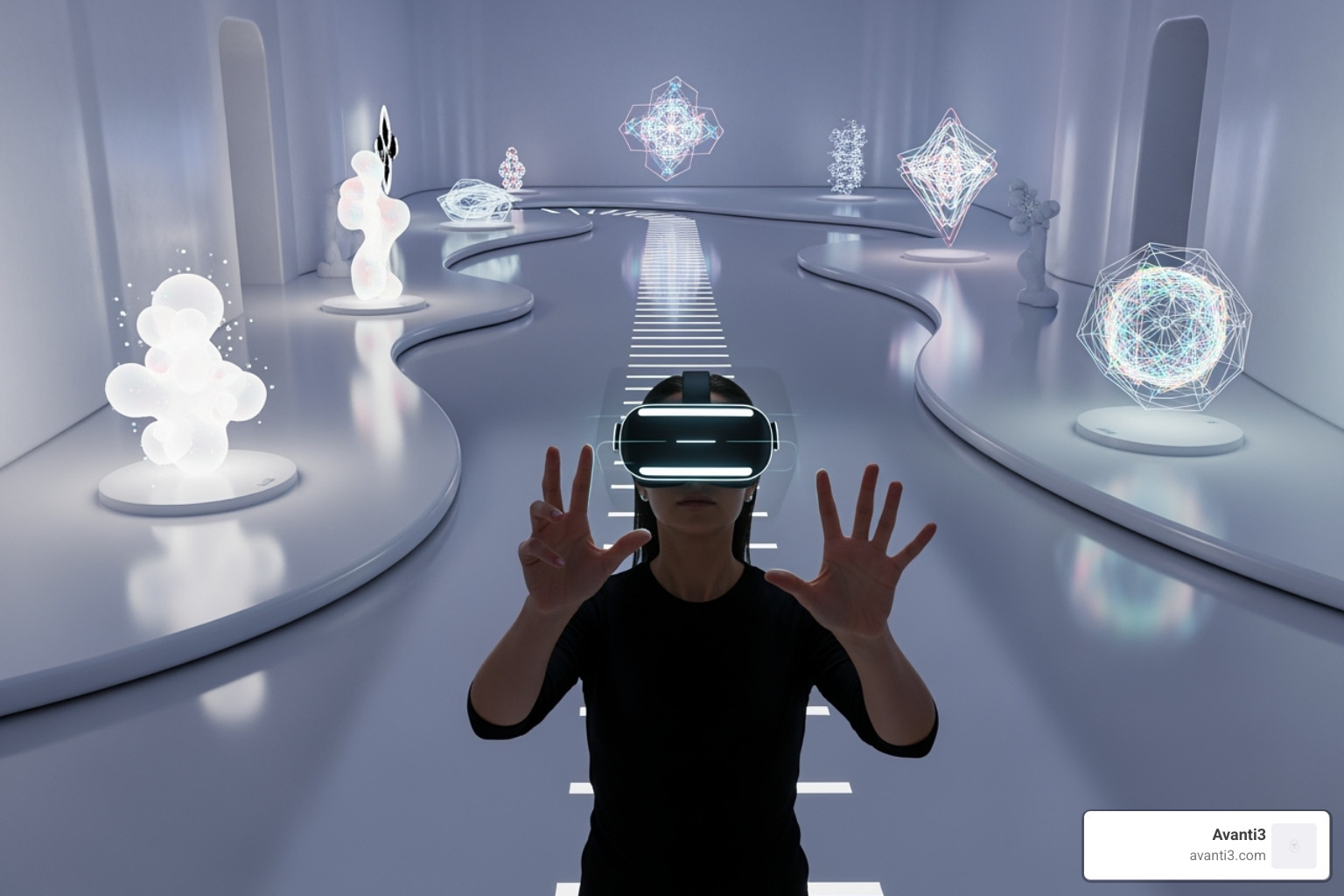
The art world is experiencing a digital renaissance, and museums and galleries are leading the charge. They’re not just putting paintings on screens they’re creating entirely new worlds where you can walk through Van Gogh’s brushstrokes or explore ancient Rome as it once stood. Virtual reality art exhibitions have become the bridge between traditional curation and cutting-edge technology.
Major museums worldwide now see VR not as a novelty, but as an essential tool for engaging visitors and breaking down barriers to access. They’re finding that virtual spaces can do things physical galleries simply can’t like letting you shrink down to explore the texture of the Mona Lisa’s wooden panel or step inside a recreation of Modigliani’s Paris studio.
Leading Platforms and Technologies
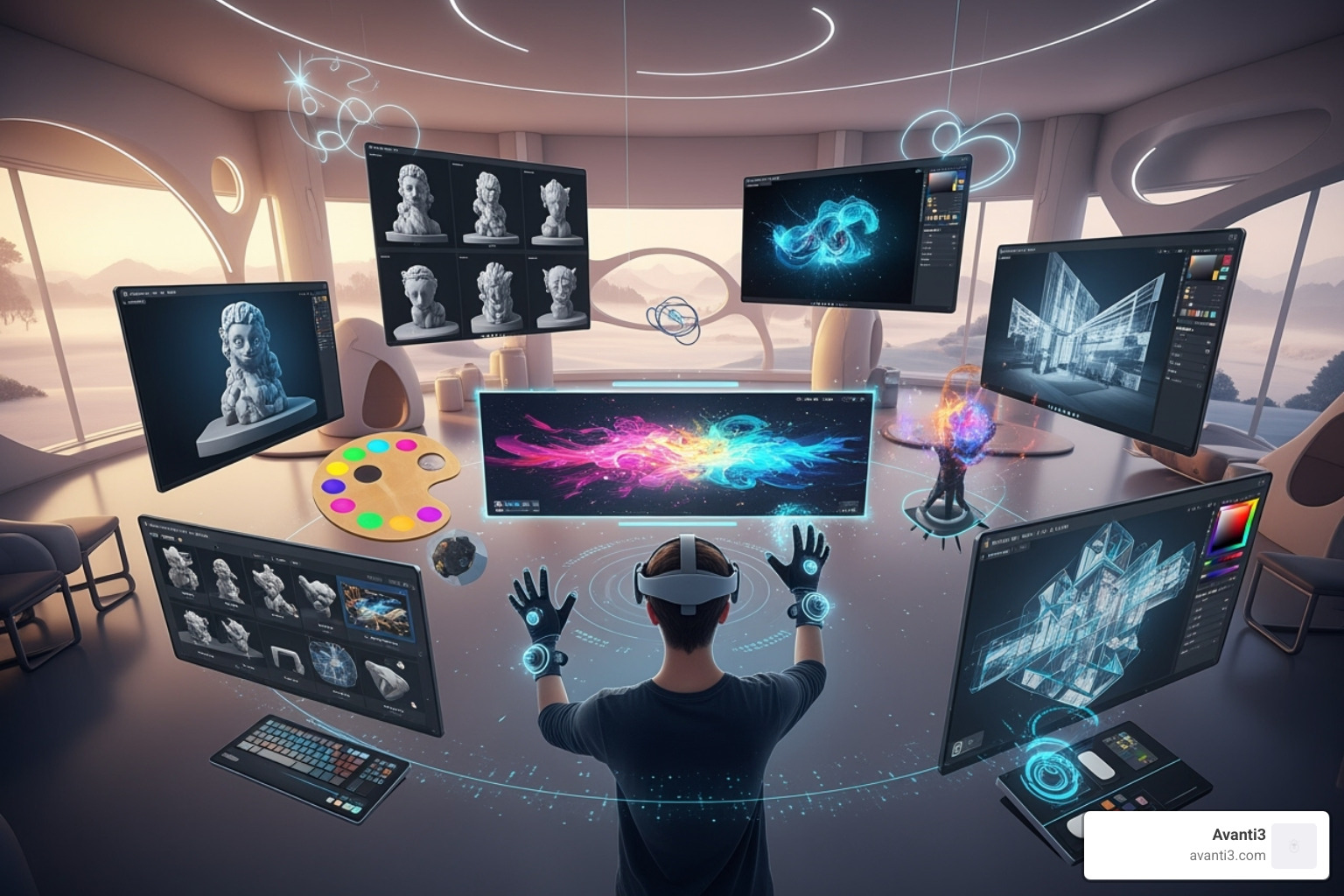
The technology making this possible is becoming more accessible. For the full experience, VR headsets like the Oculus Quest offer complete immersion, but many exhibitions are also available via web browsers using 360 b0 video technology. Behind the scenes, artists use game engines like Unreal Engine and Unity as a foundation, with 3D modeling software like Blender to craft the artworks. Interactive design then transforms these static objects into living experiences that respond to a user’s presence, while spatial audio improves immersion by making sounds appear to come from specific locations within the virtual space.
How Museums and Galleries Leverage VR
Museums creatively use VR to recreate spaces that no longer exist. London’s Tate Modern, for instance, transported visitors into Modigliani’s Paris studio. Similarly, the MAV Virtual Archeology Museum near Herculaneum brings entire Roman cities back to life. Another key strategy is enhancing physical exhibits. The Smithsonian’s “No Spectators: The Art of Burning Man” used VR to convey the immense scale of desert installations. Most importantly, VR helps museums reach global audiences. The Louvre’s “Mona Lisa: Beyond the Glass” made Leonardo’s techniques accessible to millions, and some collections now exist only in virtual reality, proving that digital experiences can sometimes surpass physical ones.
Innovative Examples of Virtual Reality Art Exhibitions
The landscape of virtual reality art exhibitions is exploding with creativity. These aren’t just digital versions of traditional galleries they’re entirely new forms of artistic expression.
The Met 360 b0 Project deserves special recognition for its accessibility. Six short videos let you virtually visit iconic spaces, often showing areas typically closed to the public. With over 11 million views, it’s proven that virtual access can complement physical visits.
Interactive digital environments now create worlds where you become part of the art, with responsive elements like digital forests and waterfalls that react to your presence.
The Mus e9e d’Orsay’s “Van Gogh’s Palette” is a 10-minute journey into the artist’s creative process, letting you explore his techniques and brushstrokes up close.
Venues dedicated to “eternal nature” themes use generative art to build constantly evolving digital landscapes inspired by natural elements.
Large-scale, projection-based immersive art spaces transform historic venues into living canvases, using massive visuals to make masterpieces come alive around you.
Entire museum collections can exist purely in virtual reality, challenging our very notion of what a museum can be.
These examples show us that we’re not just digitizing existing art we’re creating entirely new forms of artistic expression that can only exist in virtual spaces.
The Future is Immersive: Challenges and New Possibilities
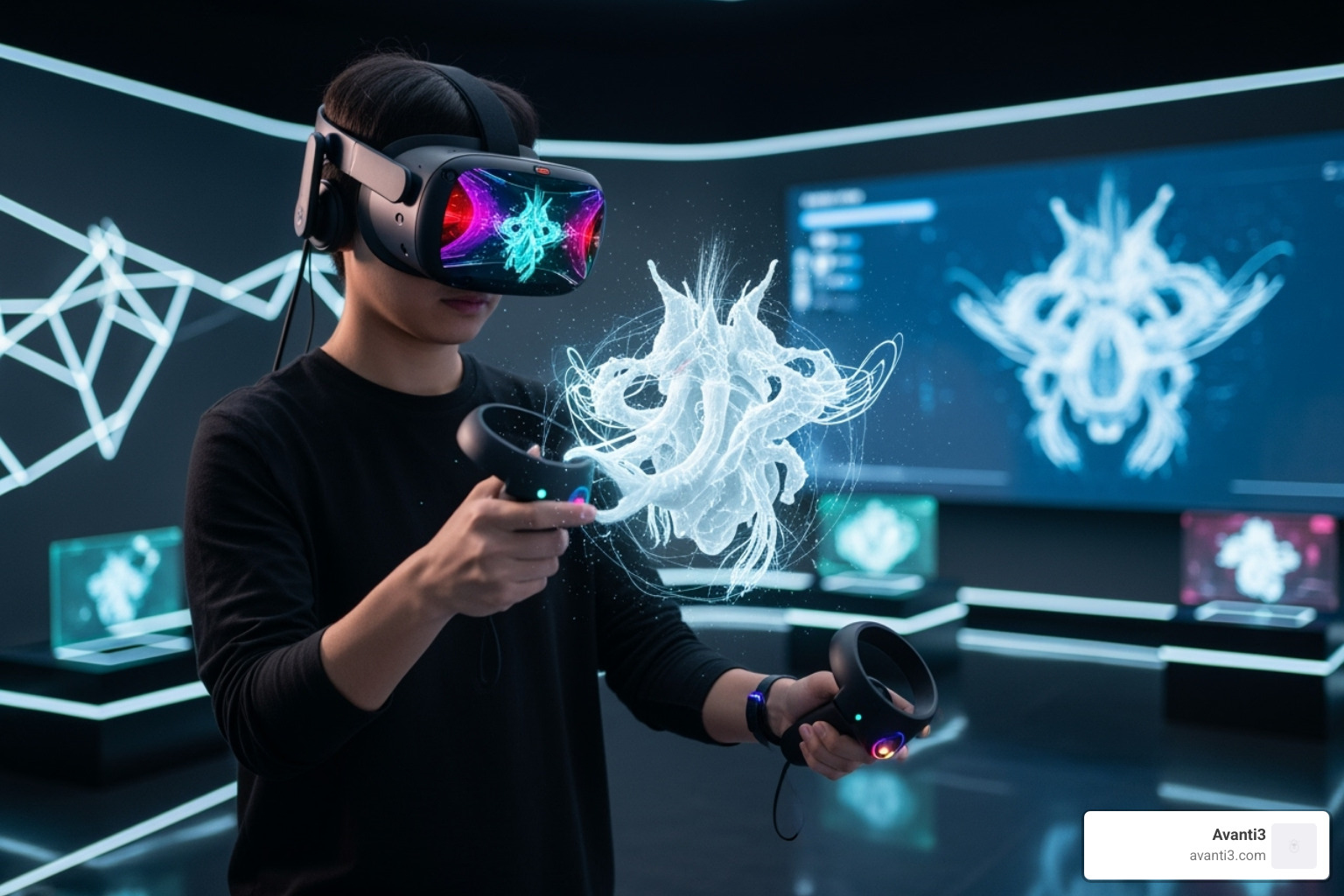
The world of virtual reality art exhibitions stands at an exciting crossroads. While we’ve seen incredible breakthroughs in how art can be created and experienced, we’re still navigating some very real challenges that shape the future of this medium.
Challenges in Implementing Virtual Reality Art Exhibitions
Let’s be honest about the obstacles facing virtual reality art exhibitions today. These are real considerations that artists and museums grapple with daily.
- Cost: Creating high-quality VR is expensive, requiring specialized hardware, software, and a team of skilled professionals, which can be a barrier for smaller galleries or independent artists.
- Hardware Limitations: While headset prices are dropping, they aren’t ubiquitous. For venues, managing and cleaning dozens of headsets is a significant logistical challenge.
- Simulation Sickness: Causing dizziness or nausea, this can be a major drawback for some users, turning an amazing experience into an uncomfortable one.
- Learning Curve: Artists face a steep learning curve, needing to master 3D modeling, game engines, and interactive design in addition to their artistic skills.
- Curation: Without physical walls to guide visitors, curators must develop new strategies to direct the experience in a boundless virtual space and avoid information overload.
The Future Outlook for VR in the Art World
Despite these challenges, the future of VR in art is electrifying. One of the most powerful applications is preserving temporary or inaccessible art. The Smithsonian’s “No Spectators” VR experience captured ephemeral art, and the Louvre’s “Mona Lisa: Beyond the Glass” lets you get closer to the masterpiece than you ever could in person. Some projects take this further, creating virtual spaces for art collections that don’t physically exist together.
AI-powered curation is emerging to help organize vast digital collections and create optimal viewing paths. This aligns with our work at Avanti3, where we integrate AI with AR/VR to empower creators.
Social VR events are changing solo viewing into community experiences, allowing art lovers worldwide to attend virtual gallery openings and interact in a shared digital space.
Future haptic feedback technology will add another layer of immersion, allowing you to feel the texture of a digital sculpture.
Looking ahead, the metaverse represents the most ambitious frontier, promising persistent virtual worlds where art evolves in real-time and creative communities can flourish, creating new models for fan monetization and community building.
The goal isn’t to replace traditional art experiences but to expand them exponentially. We’re creating new possibilities for creativity, connection, and cultural exchange that complement and improve what’s always existed.
To explore how these transformative technologies can lift your artistic vision or institutional offerings, you can find customizable virtual reality experiences that bring your creative dreams to life.