

Online community building software: 7 Powerful Best Picks 2025
Why Online Community Building Software is Essential for Digital Engagement
In today’s increasingly digital world, connections matter more than ever. That’s why online community building software has evolved from a nice-to-have into an essential tool for businesses, creators, and organizations who want to create meaningful relationships with their audiences.
The numbers tell a compelling story: the global enterprise social networks and online communities market is projected to exceed $5.5 million with a remarkable 16.5% CAGR from 2021 to 2028. This growth isn’t surprising when you consider how these platforms drive engagement, strengthen brand loyalty, and open new avenues for monetization.
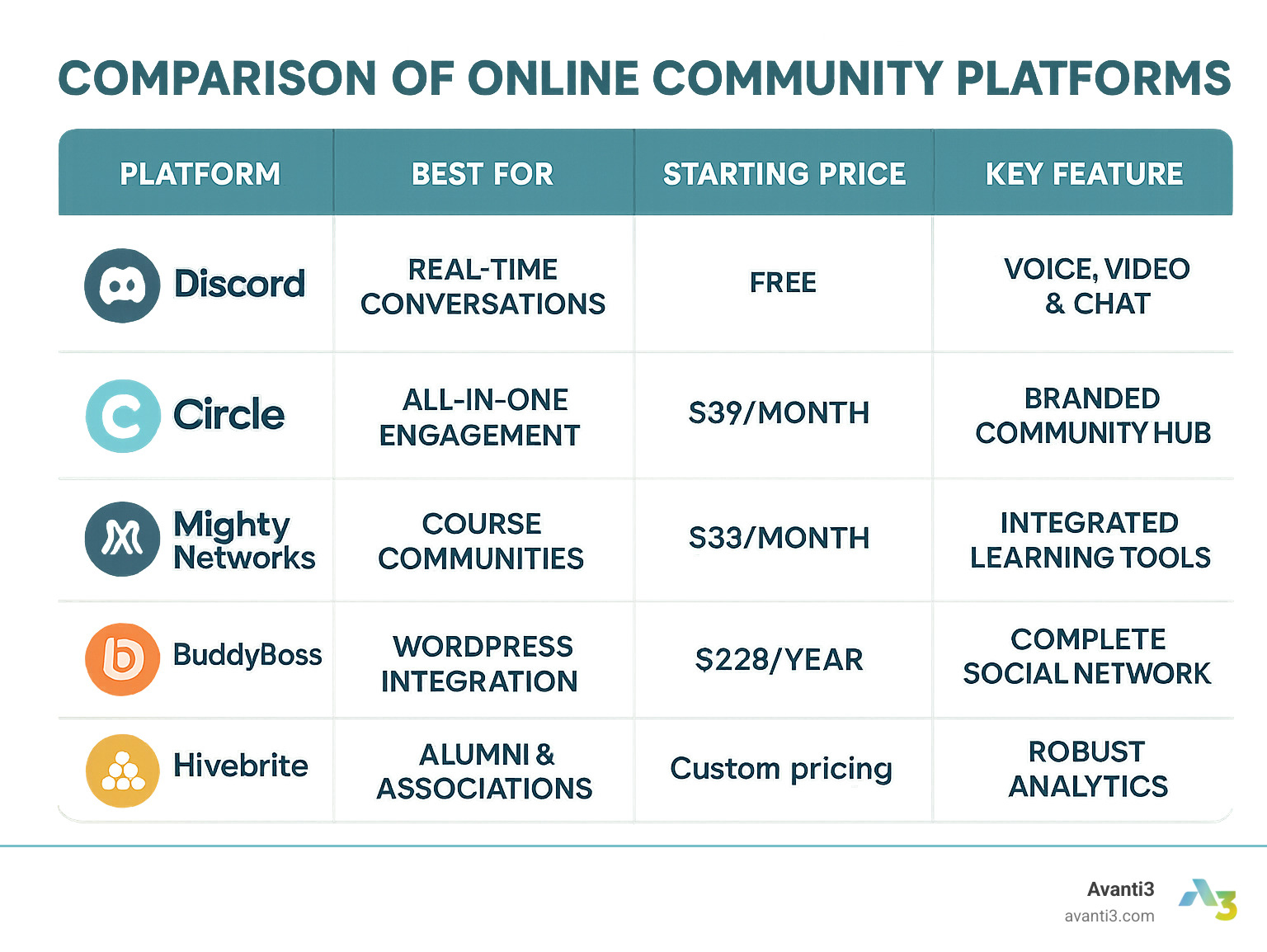
When choosing the right platform for your community needs, it’s important to understand the landscape. The market offers various solutions with different pricing models and feature sets. Some platforms provide all-in-one engagement hubs starting around $39/month, perfect for those wanting a branded community space. Others focus on real-time conversation with free voice, video, and chat capabilities. Learning-centered communities might benefit from platforms that integrate course tools starting at $33/month. WordPress enthusiasts can find solutions at $228/year for complete social network capabilities, while organizations managing alumni or associations might prefer platforms with robust analytics (though pricing is often custom).
I’ve seen how the right platform choice transforms community engagement. As many successful community builders have noted, the best platforms are intuitive, clean, and distraction-free. This experience reflects why more organizations are moving away from fragmented social media solutions toward dedicated community platforms.
Building a thriving online community requires more than just selecting a platform and inviting members. Success comes from strategic planning, consistent nurturing, and creating spaces where people feel genuinely valued. The retention benefits alone make online community building software worth the investment – members who feel connected stay longer and engage more deeply.
I’m Samir ElKamouny, founder of Avanti3, and I’ve guided countless businesses in implementing community platforms that not only drive engagement but also boost retention and generate revenue growth through strategic digital connection points.
What Is Online Community Building Software?
Online community building software is much more than just another digital tool—it’s the heartbeat of modern connection in our increasingly virtual world. These specialized platforms create welcoming digital homes where people who share interests, goals, or backgrounds can genuinely connect with each other.
Think of it as building your own private social network, but one that actually serves your specific purpose and community needs. Unlike scattered conversations across mainstream social media, these cloud-based solutions give you a centralized hub where meaningful relationships and valuable exchanges can flourish.
I’ve seen how these platforms transform casual followers into passionate community members. The magic happens when people find “their people” in a space designed specifically for their shared interests.
According to scientific research on enterprise communities, organizations that invest in dedicated community platforms see tangible benefits like improved knowledge sharing, stronger customer loyalty, and authentic brand advocacy that simply can’t be manufactured.
As one community manager wisely told me during our research: “If you can’t measure it, you can’t manage it.” This perfectly captures why purpose-built community software has become essential—it provides both the structure for connection and the insights to nurture it effectively.
Core Components of Online Community Building Software
When you’re evaluating online community building software, look for these essential building blocks that transform a digital space into a thriving community:
Member Profiles serve as digital identities within your community, allowing people to showcase who they are beyond just a username. These profiles become the foundation for authentic connections as members find shared interests or complementary expertise.
Threaded Discussions create organized spaces for conversations to unfold naturally over time. Unlike the fleeting nature of social media feeds, these discussions build valuable knowledge repositories that new members can find months or even years later.
Event Management tools bring your community together for live experiences, whether virtual workshops, AMAs with experts, or hybrid gatherings that blend online and in-person elements.
Direct Messaging opens private channels between members, facilitating deeper one-on-one connections that often become the most meaningful part of community membership.
Analytics Dashboards help you understand what’s working (and what’s not) through accessible visualizations of engagement patterns, growth trends, and other vital metrics.
Gamification Elements tap into our natural desire for recognition and achievement, using points, badges, and leaderboards to celebrate contributions and encourage participation.
Content Management features ensure that valuable resources remain findable instead of getting buried in the constant flow of new activity.
Moderation Tools help maintain a healthy environment where everyone feels safe contributing, which is absolutely essential for long-term community success.
Many community managers have shared how the right platform can be a game-changer, making it simple to build lively, interactive communities. Their experiences reflect what I’ve seen repeatedly—the right platform doesn’t just facilitate connection; it actively enables it to happen more naturally and joyfully.
Key Types of Community Platforms
The landscape of online community building software has evolved dramatically, with distinct platform types emerging to serve different community needs. Understanding these categories can help you identify which approach best aligns with your goals.
Discussion Forums and Boards
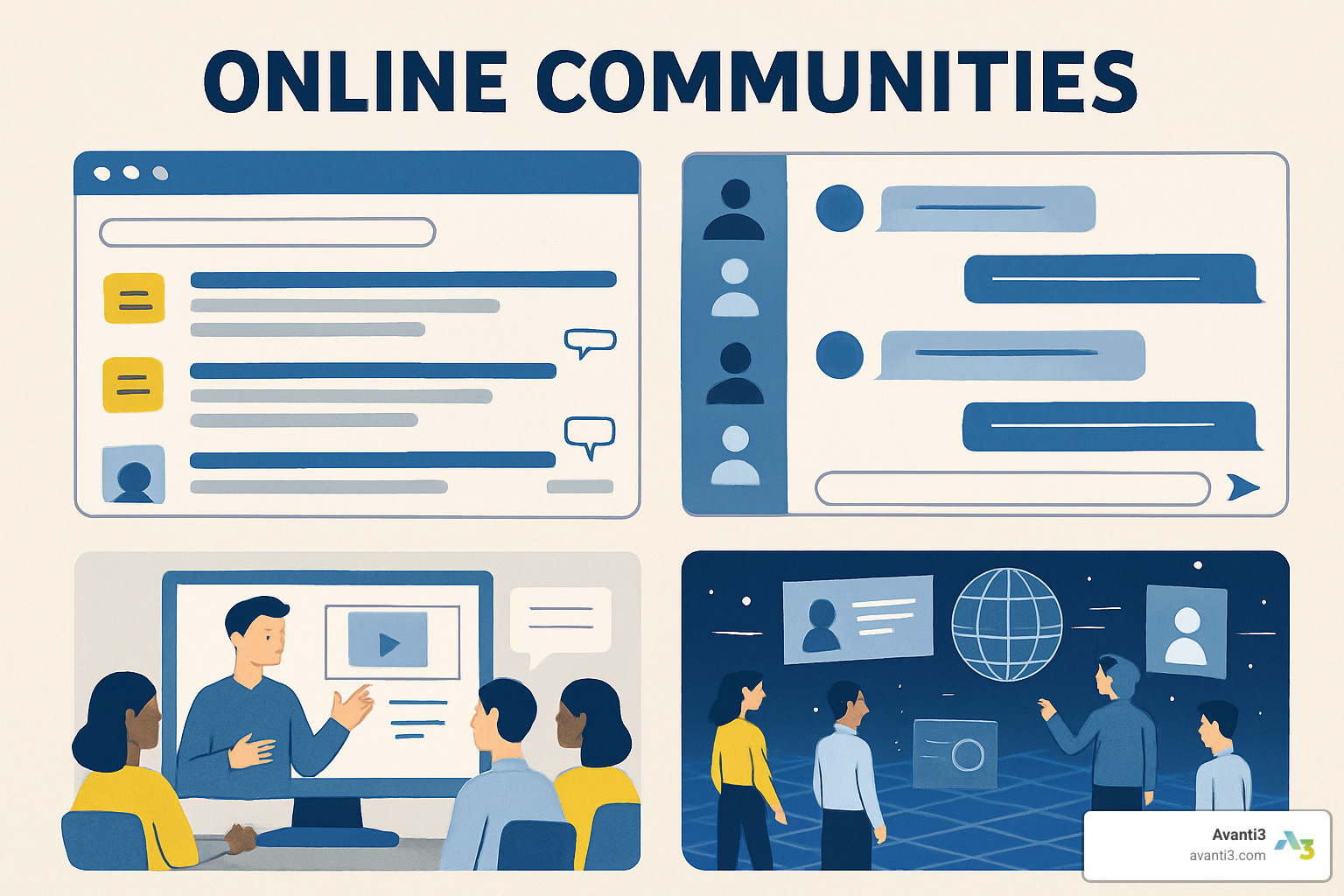
Remember those thoughtful online conversations that actually taught you something? That’s the magic of discussion forums. These platforms organize conversations into topics and threads, creating a searchable knowledge base that grows richer over time.
Modern forum platforms offer clean interfaces that make it easy to follow complex discussions. What makes forums special is their ability to host in-depth conversations that stick around. When someone searches for an answer months later, that helpful thread is still there, quietly attracting new members through search engines.
As one community manager told me, “Our forum has become our collective brain – members find solutions from discussions that happened years ago.”
Real-Time Chat Communities
If forums are like writing letters, chat communities are like hanging out at a coffee shop. These platforms create a sense of “being there” with immediate, dynamic conversations happening in real-time.
Real-time chat platforms blend text channels, voice rooms, and video capabilities. These communities shine during live events or when quick problem-solving is needed. There’s something energizing about seeing those typing indicators and knowing someone’s responding right now.
“If you have the resources to manage and direct users to a chat server,” shared one experienced community builder, “then I’d say that offers the best community experience and flexibility.”
Learning Management System (LMS) Communities
Imagine a classroom where the conversation continues long after the lesson ends – that’s the beauty of LMS communities. These platforms weave structured learning with social connection, creating spaces where knowledge and relationships grow together.
Learning-focused platforms seamlessly blend courses, discussions, and community management. These platforms excel when education is central to your mission, allowing members to track their progress while building meaningful connections with fellow learners.
Membership-Based Hubs
Some communities thrive on exclusivity and premium experiences. Membership hubs focus on delivering exceptional value to paying members, with sophisticated tools for managing access and monetization.
Quality membership platforms offer clean, branded experiences and flexible subscription options. As one community manager shared in her experience, “Clean design and flexible structure. The platform was one of the options I felt best enabled the structure I was going for.”
These platforms work wonderfully when you’re building a business around your community, with features designed to deliver and protect premium content.
Next-Gen Digital Spaces
The community platforms of tomorrow are already here, incorporating Web3 technologies, immersive experiences, and AI to create entirely new ways for people to connect.
At Avanti3, we’re exploring this frontier by integrating blockchain, NFTs, and artificial intelligence to build community experiences that go beyond traditional engagement. These cutting-edge platforms enable unique digital experiences, tokenized reward systems, and forms of interaction that simply weren’t possible before.
The excitement around these spaces comes from their ability to create genuine digital ownership and novel ways for members to participate and benefit from community growth.
Pros & Cons Snapshot
| Platform Type | Pros | Cons |
|---|---|---|
| Discussion Boards | Searchable knowledge base, SEO friendly, structured conversations | Can feel slower, less immediate interaction |
| Real-Time Chat | Immediate engagement, voice/video options, spontaneous connection | Message history limitations, harder to organize knowledge |
| LMS Integration | Combined learning and community, progress tracking, structured pathways | More complex setup, potentially overwhelming interface |
| Membership Hubs | Clean branded experience, monetization tools, exclusive content | Higher costs, requires ongoing valuable content creation |
| Next-Gen Spaces | Innovative engagement, digital ownership, unique experiences | Newer technology, steeper learning curve for some users |
The right platform for your community isn’t just about features—it’s about matching the technology to your community’s natural communication style and goals. The best choice creates an environment where your particular community feels at home and can thrive.
Top 7 Must-Have Features in 2025
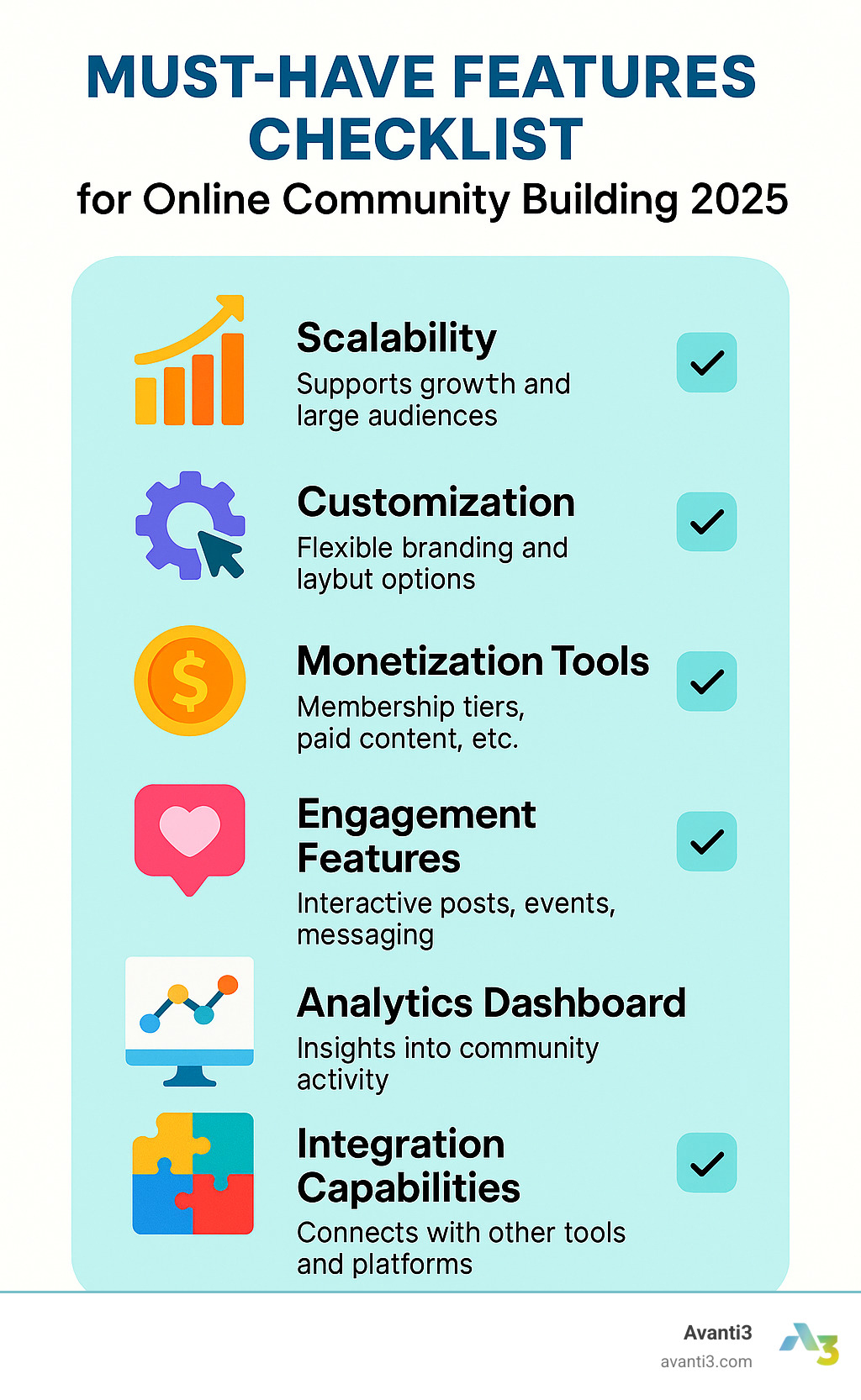
As we look ahead to the future of online community building software, certain features have emerged as essential for creating successful, sustainable digital communities. Here are the seven capabilities you should prioritize when selecting your platform:
1. Scalability
Cozy community you started with just 50 members? What happens when it explodes to 5,000? Your platform needs to grow right alongside your success without missing a beat.
I’ve seen too many community builders forced to migrate platforms just as they gain momentum because their software couldn’t handle the growth. As one community manager told me, “Once you hit about 500 active members, you really need to keep an eye on those server resources.” Look for platforms with elastic infrastructure that breathes with your usage spikes, pricing that makes scaling affordable, and consistent performance even as your membership multiplies.
2. Robust Integration Capabilities
No community is an island—at least, no successful one is. Your community platform needs to play nicely with all your other digital tools.
Think about how powerful it is when a member’s activity in your community automatically updates their profile in your CRM, or when completing a course triggers a congratulatory email sequence. These seamless connections between systems create magic moments for your members and save you countless hours of manual work. Prioritize platforms that offer API access, Single Sign-On capabilities, pre-built Zapier connections, and webhook support for those “if this, then that” automations that make community management feel effortless.
3. User Experience & Accessibility
The most feature-rich platform in the world is worthless if your members find it confusing or frustrating to use. Great community software feels invisible—it gets out of the way and lets connections happen naturally.
Many community builders have shared how the right platform embodies what many others miss – true community! Look for clean navigation, responsive mobile design, and WCAG compliance for accessibility. Every extra click or confusing interaction creates friction that drives members away.
4. Flexible Monetization Options
Gone are the days when community was just a cost center. Today’s best online community building software offers multiple ways to generate revenue directly from your community investment.
Whether you’re offering premium subscriptions, selling digital products, or creating tiered membership levels, your platform should support your business model without forcing you into workarounds. The right monetization tools let you experiment with different revenue streams—subscription management, content paywalling, digital asset marketplaces, and multiple payment options—so you can find what resonates most with your particular audience.
5. Advanced Security & Compliance
Trust is the foundation of any thriving community, and nothing erodes trust faster than data breaches or privacy concerns. As one platform provider wisely noted, “If something is free, you’re paying for it somehow and it’s usually with your privacy.”
Your members are sharing their thoughts, content, and sometimes sensitive information within your community. Honor that trust by choosing platforms with robust security features: data encryption, granular permission controls, two-factor authentication, and compliance tools for regulations like GDPR and CCPA. Regular security audits and updates should be standard practice for any platform you consider.
6. AI-Powered Automation
The most valuable community managers spend their time on high-touch engagement, not repetitive tasks. AI is changing what’s possible in community management by handling routine work while you focus on meaningful connections.
Imagine content that moderates itself, personalized onboarding that adapts to each new member, and smart algorithms that connect members with similar interests. These aren’t science fiction—they’re features available now in leading platforms. AI tools can recognize engagement patterns, organize your knowledge base, and even predict which members might be at risk of leaving, giving you the insights to step in at just the right moment.
7. Native Mobile Experience
With over half of digital engagement happening on mobile devices, a great mobile experience isn’t optional—it’s essential. Your members want to check in on discussions while waiting in line for coffee or post quick updates between meetings.
Native iOS and Android apps with push notifications, offline access, and touch-optimized interfaces keep your community accessible wherever your members go. As industry experts highlight: “Mobile app support can greatly boost community engagement.” Don’t settle for clunky mobile web experiences when dedicated apps can dramatically increase daily active usage.
Integration & Scalability Impact
The magic happens when your community connects seamlessly with your other business systems. These integrated workflows create a multiplier effect on your community’s value.
For example, when a member completes a course, you could automatically add them to an advanced segment in your CRM, trigger a congratulatory email, and invite them to a more advanced group. These connected experiences feel magical to members while saving you hours of manual work. At Avanti3, we’ve seen organizations transform their engagement metrics through our Digital Engagement Platforms, which create these powerful connections between community interactions and broader business systems.
User Experience & Customization
Your community should feel like home for your members—a place that reflects your brand’s unique personality and values. White-label branding, custom domain support, and flexible theme builders let you create a consistent experience without needing a developer on call.
Many community managers have noted how reducing clicks for members and making it easy to steer to relevant sections greatly improves the user experience. Great UX design isn’t just about looking pretty—it’s about creating intuitive pathways that guide members exactly where they want to go. For global communities, multilingual support ensures everyone can participate fully, regardless of their native language.
Best Practices for Launching & Running a Thriving Community
Building a successful online community requires more than just selecting the right online community building software—it demands strategic planning, consistent engagement, and ongoing optimization. Here are proven best practices to help your community thrive:
Define Clear Community Objectives
When I talk with clients about launching their communities, I always start with one simple question: “What do you want this space to achieve?”
Your community needs a purpose that resonates with both your organization and your members. Are you building a support hub where customers help each other troubleshoot? A learning space where professionals share expertise? Or perhaps a creative playground where members collaborate on projects?
One community expert I recently interviewed put it perfectly: “Define clear community objectives and audience needs before you even think about which buttons and features you want.” This clarity will guide every decision that follows, from platform selection to content strategy.
Create a Structured Onboarding Journey
Think about the last time you walked into a party where you didn’t know anyone. Awkward feeling? That’s exactly what new community members experience without proper onboarding.
A thoughtful welcome sequence transforms that experience entirely. When members first join, guide them through completing their profiles, making introductions, and connecting with relevant content. Give them clear “first actions” that build momentum and confidence.
Alexandru Leucea, Community Manager at Bitdefender, shared something that still amazes me: “The truly amazing thing is that our results were achieved with a team of only two admins and a handful of moderators, none of whom had previous experience in community management.” This shows how well-designed systems can amplify even a small team’s impact.
Establish Community Guidelines and Moderation Practices
Every thriving community needs boundaries. Clear guidelines aren’t about restricting conversation—they’re about creating the psychological safety that allows genuine connection to flourish.
Your community standards should reflect your values while being straightforward enough that members can easily understand them. Train your moderators not just on what to remove, but on how to guide conversations back to productive ground. Sometimes the best moderation is the kind members barely notice.
I’ve found that combining human touch with targeted automation creates the most effective moderation approach. Content filters can catch obvious issues, while your human team focuses on nuanced situations that require discernment.
Implement Regular Engagement Rituals
Communities thrive on rhythm and predictability. When members know what to expect, they’re more likely to participate consistently.
Weekly discussion threads on specific themes give people regular touchpoints to engage. Monthly expert AMAs (Ask Me Anything sessions) create excitement and draw passive members into active participation. Quarterly challenges build camaraderie through shared goals, while annual recognition events celebrate contributions and strengthen community bonds.
These recurring touchpoints aren’t just nice additions—they’re the heartbeat of your community. They give members reasons to return regularly and help transform occasional visitors into dedicated participants.
Empower Community Champions
In every community I’ve helped build, there’s always a small group of members who naturally rise to the top through their enthusiasm, helpfulness, and consistent engagement. These people are pure gold.
Recognize and nurture these champions by creating special roles, providing exclusive opportunities, and genuinely valuing their input. Your most engaged members often understand the community’s needs better than anyone else.
As one platform cleverly suggests: “Leverage AI activity scores to recognize and reward your most active members.” These tools can help you identify potential champions who might otherwise fly under your radar.
Collect and Act on Member Feedback
The most successful communities evolve continually based on member input. Regular surveys, analytics reviews, and feedback sessions should inform your roadmap, but the key is what happens next.
When you implement changes based on member suggestions, make sure to close the loop by communicating what you did and why. This demonstrates that member voices truly matter and encourages further participation in shaping the community.
Joey Martelli, an Advocacy & Public Affairs Manager, shared this insight about platform consolidation: “Getting to where it’s a one-stop-shop and working within that one platform that has everything is so much better and easier for us.” This highlights how streamlining the member experience based on feedback directly improves satisfaction.
Monetization Playbook
Let’s talk money. For most organizations, communities need to generate revenue to be sustainable. I’ve seen several approaches work exceptionally well:
Create tiered membership subscriptions that offer progressively more value at each level. Start with a free tier that provides basic access, then add premium and VIP levels with exclusive benefits that truly justify the price difference.
Cohort-based courses combine learning with community support, creating powerful experiences members will gladly pay for. The accountability and shared journey aspects often lead to completion rates far higher than self-paced options.
Gated content and experiences like premium resource libraries, exclusive events, and expert office hours provide tangible value while maintaining accessible entry points to your community.
For more innovative approaches, explore digital asset marketplaces where members can exchange services or products. This not only generates revenue but creates additional value for participation.
At Avanti3, we’re pioneering new monetization models through our Web3 Community Management approach, using digital assets and blockchain technology to create unique value exchanges that traditional platforms simply can’t match.
Measuring Success & KPIs
“What gets measured gets managed” isn’t just a business cliché—it’s especially true for communities. Focus on metrics that truly matter:
Engagement metrics tell you how actively members participate. Track daily and monthly active users, posts per member, response rates, and session duration to understand how deeply members are connecting.
Growth metrics reveal your community’s health and momentum. Monitor new member acquisition alongside retention rates to ensure you’re not just filling a leaky bucket.
Value metrics connect community activity to business outcomes. Measure revenue per member, support ticket deflection, knowledge base contributions, and Net Promoter Score to demonstrate ROI.
Anna Blomstedt, Senior Manager of Self-Service & Digital CX, shared something that always makes me smile: “The amount of money that we make from the community pays for much more than just the platform; by measuring revenue contribution alone we are able to pay off the platform.” This perfectly illustrates why connecting community metrics to business outcomes isn’t just nice—it’s necessary for long-term success.
Real-World Success Stories Without the Hype
Let’s explore how organizations are using online community building software to achieve tangible results, without the marketing fluff. These case studies demonstrate the real impact of strategic community investment.
Alumni Network Change
A prestigious university faced declining engagement with its 200,000+ alumni. After migrating from a static website to a dedicated community platform, they achieved:
- 27% increase in member logins
- 40% open rates on community emails (compared to 12% previously)
- Streamlined workflows for staff managing alumni relations
As their Community & Digital Engagement Director shared: “Our platform enables us to sustain and scale our community and virtual engagement strategies to continue supporting our members as best as possible.”
The key to their success wasn’t just new technology—it was creating dedicated spaces for different graduation years and interest groups, combined with an intuitive mobile experience that made staying connected feel effortless rather than obligatory.
SaaS Customer Community Hub
A cybersecurity software company was drowning in support tickets until they implemented a customer community that became their secret weapon. The results were impressive: support call volume dropped by 20% through peer-to-peer assistance, response times plummeted from 12+ hours to under 2 hours, and 47% of community members reported increased purchase intent.
Their approach combined a searchable knowledge base with lively discussion forums and regular expert Q&A sessions. As one Product Marketing Manager noted: “The company experienced improved community building with fantastic tools, simplifying connections and expertise sharing in cybersecurity.”
What made this work wasn’t just software—it was the strategic decision to empower customers to help each other while making expert knowledge easily accessible.
Creator Membership Community
A content creator was feeling stretched thin across YouTube, Instagram, and email until they consolidated their audience on a dedicated platform. The change was remarkable: consistent $39/month revenue from 500+ members, a 78% jump in user engagement, and 121% growth in active participation.
Behind these numbers was a thoughtful tiered membership model with exclusive content, monthly workshops that members actually looked forward to, and direct access that made fans feel valued. The creator’s success came from providing consistent value while fostering genuine connections between members who shared interests—something that scattered social platforms simply couldn’t deliver.
Educator Cohort Experience
An educational consultant transformed their one-off workshops into a thriving community of practice for teachers, with results that defied industry norms: 92% completion rate for their flagship course (compared to the industry average of 15%), sustainable revenue through recurring memberships, and a rich repository of classroom resources created through member collaboration.
What made the difference? Their approach combined structured learning pathways with peer support and implementation guidance. By focusing on practical application and ongoing connection rather than just content delivery, they created significantly more value for participants who no longer felt alone in implementing new teaching methods.
Hybrid Event Community
A professional association was struggling with dwindling annual conference attendance until they extended their event experience through a year-round community. The result was 365-day engagement between physical events, a 34% boost in conference registration, and new sponsorship opportunities that generated additional revenue.
As one CPO at a running app company shared about their community platform: “Our platform was key to the app’s success, enabling a global running community with its best customizability and seamless integration.”
The association found that their annual conference wasn’t just an event—it was a milestone in an ongoing community journey that kept members connected and engaged throughout the year.
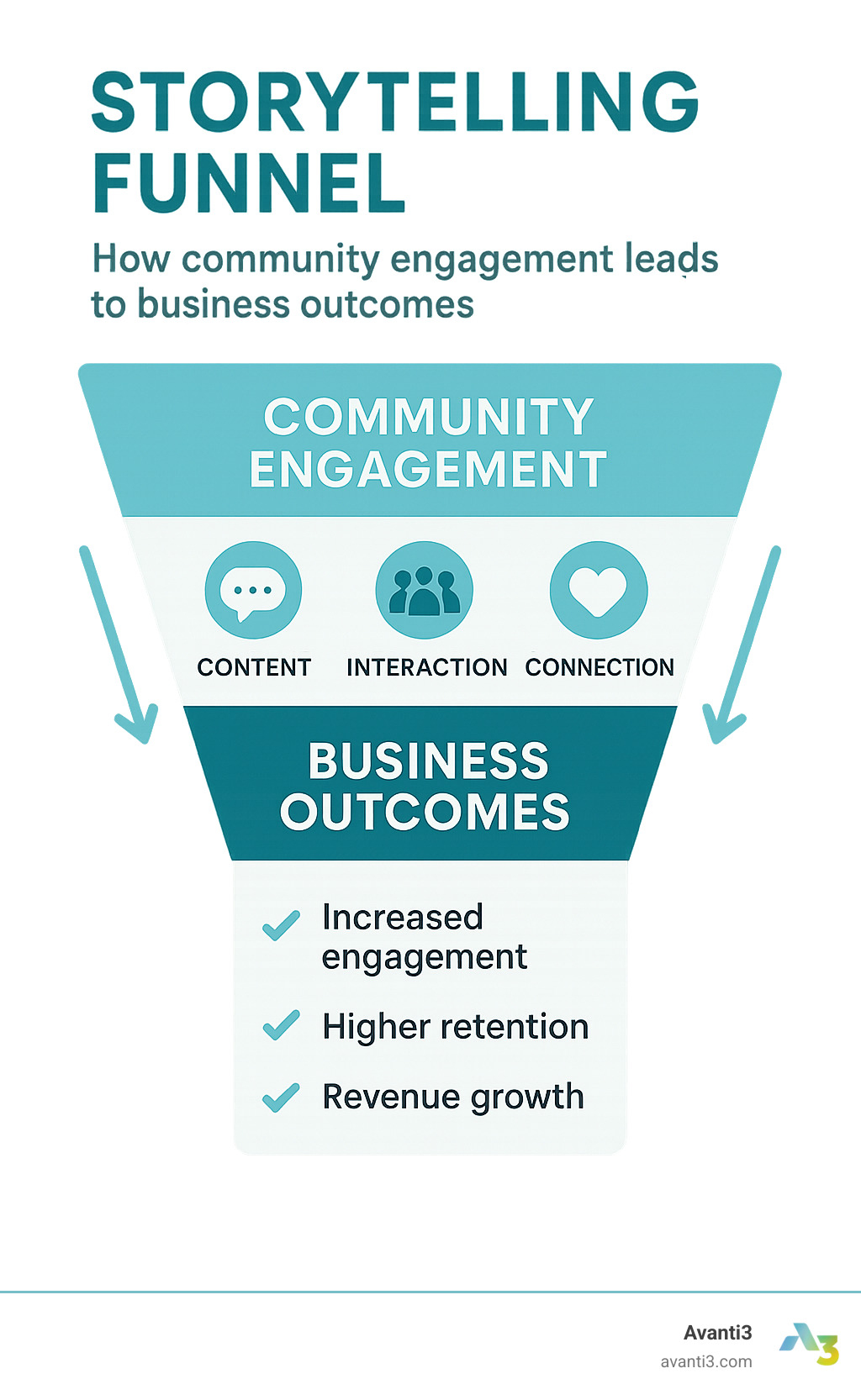
These success stories share common elements: clear objectives, consistent engagement strategies, and platforms that aligned with their specific community needs. But perhaps most importantly, they show how investing in online community building software creates tangible business value that goes far beyond just “engagement.”
What’s particularly striking is how each organization adapted their community strategy to their unique situation. They didn’t just follow a template—they built spaces that solved specific problems and created specific opportunities for their members.
At Avanti3, we’ve seen how Web3-powered community tools can take these results even further, creating unique digital experiences that transform passive audiences into active, invested community members.
Frequently Asked Questions about Online Community Building Software
What challenges arise when migrating to new software?
Moving your community to new online community building software isn’t always smooth sailing. It’s a bit like moving houses – exciting but with inevitable hiccups along the way.
The technical challenge of data migration often catches community managers by surprise. Member profiles, conversation histories, and shared content all need to find their proper place in the new system. Before making any switch, check whether your new platform offers migration tools or services, and create a thorough plan for mapping your data from one system to another.
Members themselves can be the biggest hurdle, as humans naturally resist change. I’ve seen communities where long-time members threatened to leave rather than adapt to a new platform! You can smooth this transition by communicating benefits early and clearly, involving your most active members in the decision process, providing friendly onboarding support, and keeping some familiar elements in the new environment.
Don’t be surprised if you see engagement temporarily dip during the transition. It’s completely normal, but you can counteract it with exciting launch events, special perks for early adopters, increased staff presence, and strategically highlighted content that sparks fresh conversations.
As one community manager shared from their experience: “Moving our client to a new platform for a performance boost” required careful planning but ultimately improved the member experience significantly.
How do pricing models differ across platform types?
When it comes to online community building software, pricing structures vary widely, and understanding these differences helps you avoid budget surprises down the road.
Many platforms offer free tiers with limitations, providing robust features at no cost but monetizing through premium upgrades. While tempting, remember this community manager’s wise observation: “If something is free, you’re paying for it somehow and it’s usually with your privacy.”
Per-member pricing is common among many platforms ($39-$399/month with member caps from 100-1000+) and others ($33-$99/month plus transaction fees). This model works well for smaller communities but can become quite expensive as you grow. One reviewer pointed out the stark reality: “Some platforms’ Pro plans cost $8.75 per user/month—500 users would total $4,375 per month.” Ouch!
Some platforms offer refreshingly simple flat-rate pricing, like $228/year regardless of your community size. This predictable cost makes budgeting much easier as you scale.
The freemium approach gives you basic functionality for free while charging for advanced features like improved moderation tools, detailed analytics, or deeper customization options. These platforms typically also take a small transaction fee (usually 1-5%) on any monetization features you implement.
Larger organizations with complex needs typically receive custom enterprise pricing based on their specific requirements, support needs, and contract length.
When evaluating costs, look beyond the advertised price to consider the total cost of ownership, including any add-ons, transaction fees, and potential scaling costs. Also factor in less obvious expenses like custom development or integration needs that might be necessary for your specific use case.
Which metrics prove ROI for community initiatives?
Proving the business value of your community requires connecting community activities to tangible outcomes that matter to decision-makers. Here’s how to make that case effectively.
Direct revenue metrics offer the clearest evidence of community value. Track subscription revenue from memberships, product sales within the community, event registrations driven by community engagement, and any affiliate or partnership revenue generated through community channels.
The retention impact of your community can be incredibly powerful. Compare customer retention rates between community members and non-members, calculate the lifetime value differential for community participants, and track how renewal rates improve with community activity. These numbers often reveal that community members stay longer and spend more.
Support efficiency gains show how your community reduces operational costs. Measure support ticket deflection (how many problems get solved in the community instead of through your support team), the value of knowledge base contributions, and the volume of peer-to-peer support interactions.
Your community also amplifies marketing efforts through user-generated content, referral traffic, and brand advocacy activities like testimonials and social sharing. These organic promotional benefits often outperform paid marketing in both effectiveness and authenticity.
Product teams benefit tremendously from community insights, including feature ideas, feedback collection, beta testing participation, and bug reporting. These contributions improve your offerings while reducing development costs.
As one community manager noted in our research: “The amount of money that we make from the community pays for much more than just the platform; by measuring revenue contribution alone we are able to pay off the platform.”
The most compelling ROI calculations combine multiple value streams and directly compare community members’ behaviors with non-members. This approach clearly isolates and demonstrates your community’s true business impact.
Conclusion
The landscape of online community building software continues to evolve rapidly, with platforms increasingly specializing to serve different community types and business objectives. As we’ve explored, the right platform choice depends on your specific goals, audience needs, and operational requirements.

When you strip away all the technical features and pricing models, successful communities share a simple truth: they thrive when they provide genuine value, foster meaningful connections, and create spaces where people feel they truly belong. The technology is just the vessel—it’s what you fill it with that matters.
I’ve seen how the right community platform can transform casual visitors into passionate advocates. One client told me, “It’s like we finally built a digital home our customers actually want to hang out in,” which perfectly captures what we’re all aiming for.
At Avanti3, we’re taking community building into exciting new territory by weaving Web3 technologies like NFTs, blockchain, and AI into the fabric of engagement. This isn’t about jumping on buzzwords—it’s about creating tangible value through digital ownership, innovative reward systems, and personalized experiences that traditional platforms simply can’t deliver.
Think of it as community building 2.0—where members don’t just participate but truly own a piece of the community they help build. When someone contributes something valuable, they can receive recognition that has real, transferable value beyond just a thank-you message.
Your community strategy should ultimately align with your broader organizational goals, whether that’s reducing support costs, boosting customer retention, or creating new revenue streams. The most successful communities we’ve helped build all start with clear objectives and measure their success against those specific outcomes.
Ready to explore how these advanced community technologies might fit into your digital engagement strategy? Check out our Community Building Software to see how we’re helping organizations create future-proof digital communities that drive meaningful business results without sacrificing the human connection that makes communities special in the first place.
The future of community building isn’t just about better features or slicker interfaces—it’s about creating more meaningful, personalized, and purposeful spaces where people connect in ways that matter. And honestly, that’s pretty exciting.